
 Call Anytime
833.722.6566
Breathalyzer Inaccuracies and Your Pennsylvania DUI Defense Strategy
Why Breathalyzer Accuracy Matters in a Pennsylvania DUI Defense
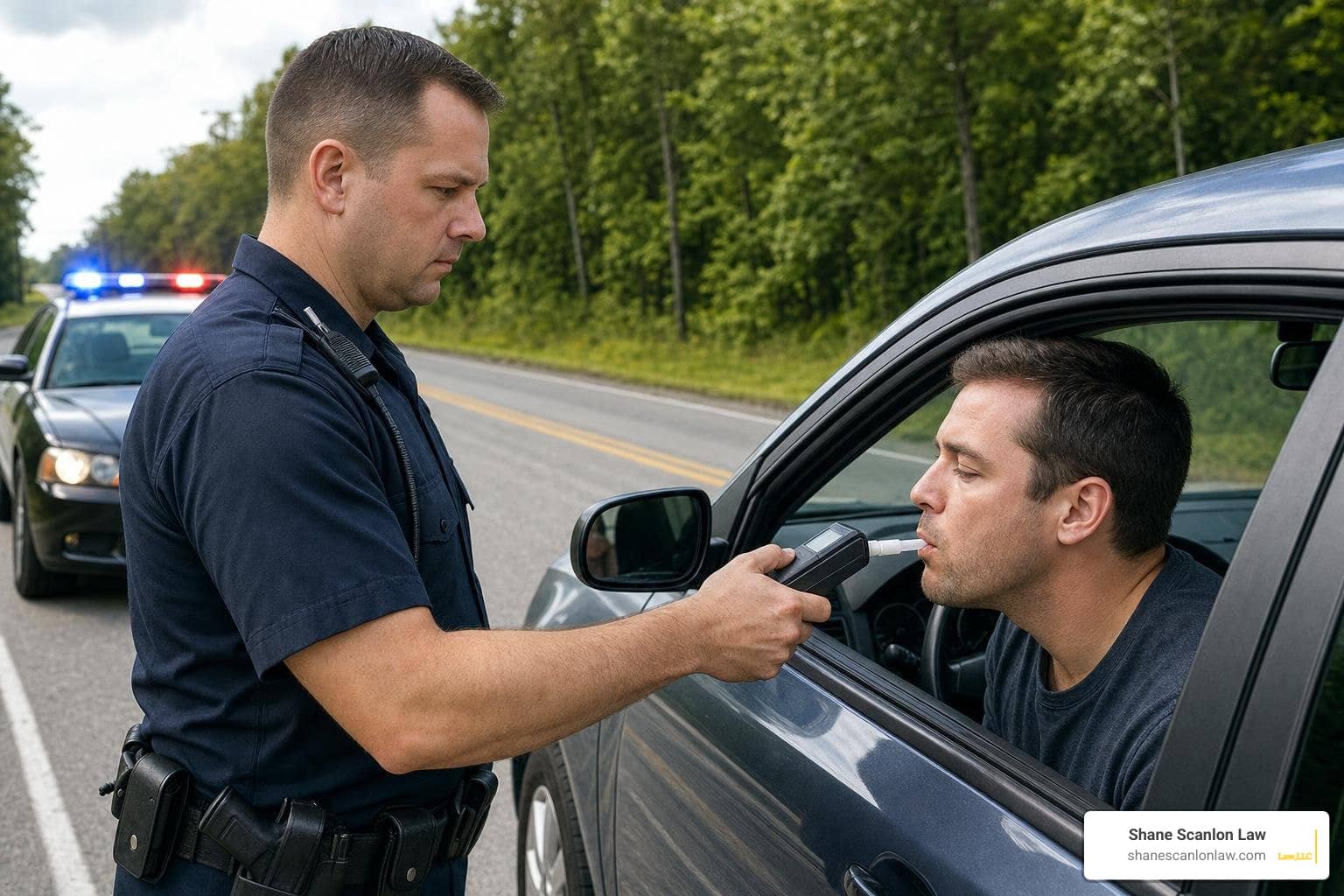
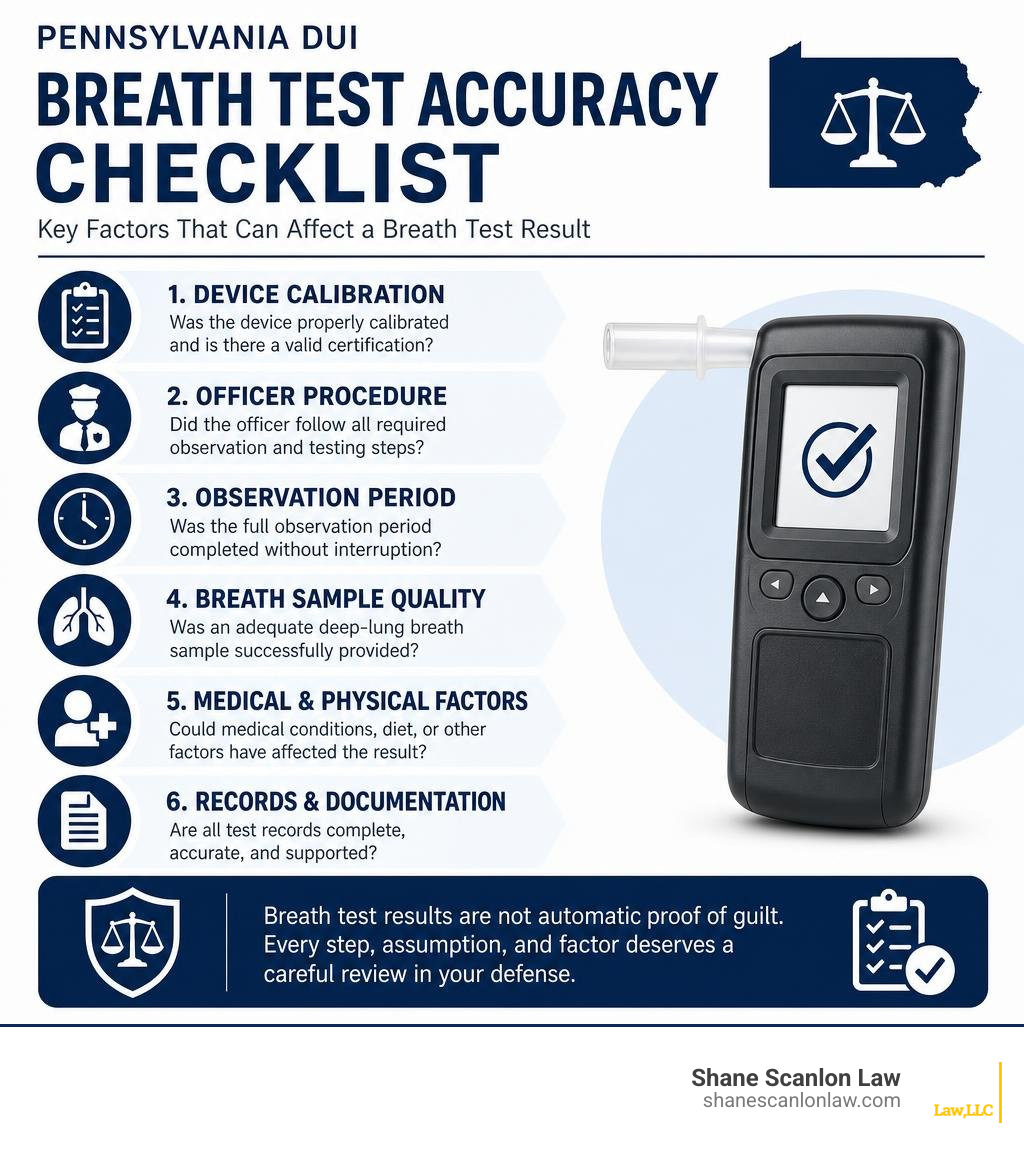
A breath test result can be strong evidence, but it is not automatic proof of guilt. In a Pennsylvania DUI case, a defense lawyer can review whether the device was properly tested, whether the officer followed the required observation and testing steps, and whether medical or physical factors could have affected the sample. Breathalyzer accuracy in a Pennsylvania DUI defense may be especially important when a reading is close to a legal threshold or falls above the range used for routine calibration testing.
Pennsylvania uses evidential breath-testing devices, including the Intoxilyzer 5000EN, to estimate blood alcohol concentration from deep-lung breath. That estimate depends on assumptions about breath, body temperature, alcohol absorption, and the machine’s calibration. A valid calibration certificate can support the Commonwealth’s case, but it does not make a specific test result conclusive. Courts have recognized that jurors may weigh breath evidence with all other evidence in the case.
I am Shane Scanlon, a Pennsylvania trial lawyer and former Lackawanna County District Attorney with more than 20 years of courtroom experience handling DUI and criminal cases. My experience on both sides of the courtroom helps me assess breathalyzer accuracy Pennsylvania DUI defense issues and identify the records, procedures, and evidence that deserve close review.
How Breath Testing Works and Breathalyzer Accuracy in Pennsylvania DUI Defense
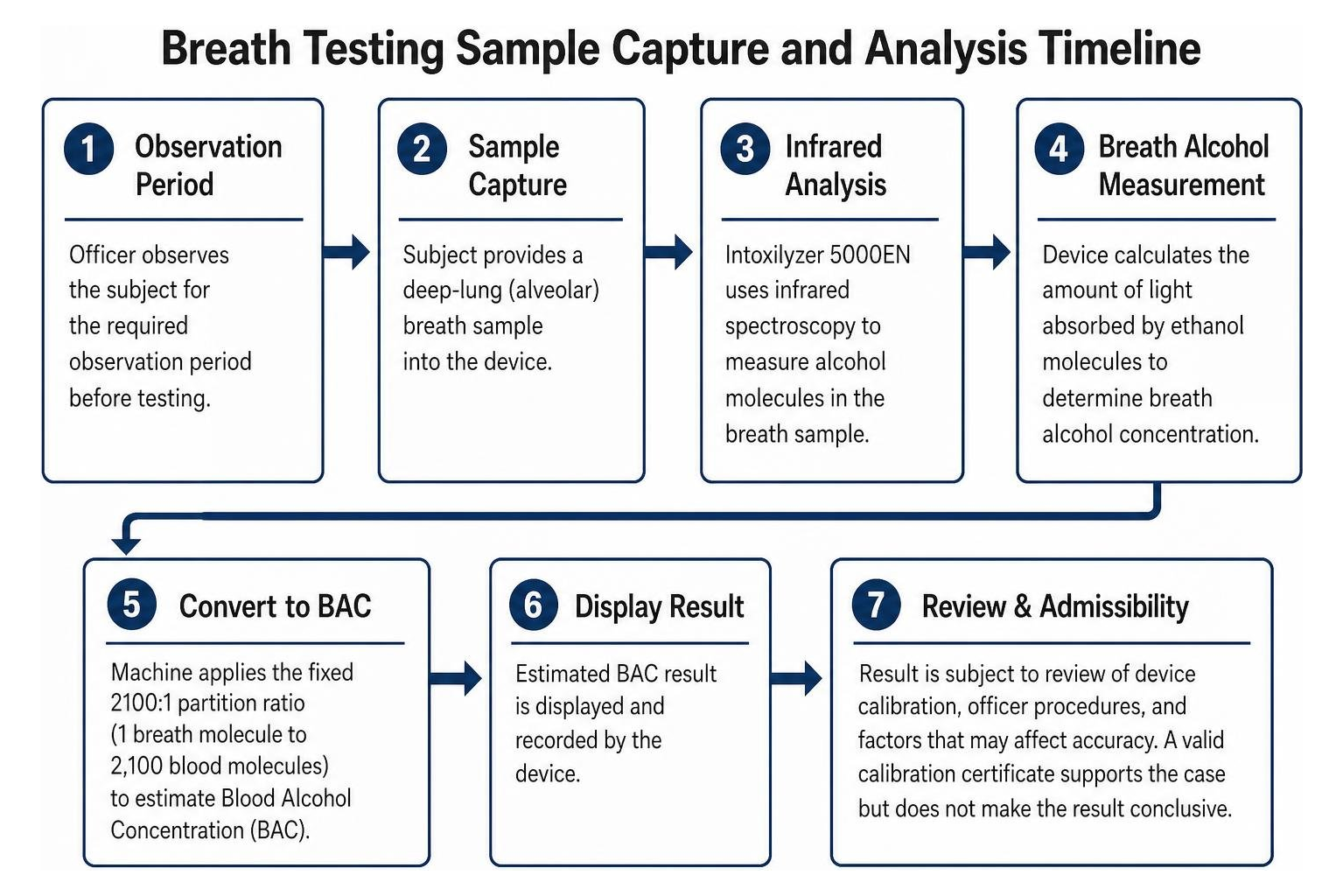
When an officer conducts an evidential breath test in Pennsylvania, the device does not directly test your blood. Instead, instruments such as the Intoxilyzer 5000EN use infrared spectroscopy to measure alcohol molecules passing through a breath chamber. The machine directs infrared energy through the captured alveolar (deep-lung) air sample and calculates the amount of light absorbed by ethanol molecules.
To convert this breath measurement into a Blood Alcohol Concentration (BAC) reading, the machine relies on a fixed scientific assumption: the 2100:1 partition ratio. This formula assumes that for every single molecule of alcohol in your breath, there are 2,100 molecules of alcohol in your bloodstream.
Under Pennsylvania’s implied consent statute (75 Pa.C.S. § 1547), prosecutors rely on these calculated readings to establish per se intoxication. However, human biology rarely follows a uniform mathematical constant. Individual partition ratios naturally vary from 1142:1 to 3487:1 based on biological variables, meaning an average formula can easily overestimate true intoxication. Understanding DUI dismissals and the science of beating a bad breathalyzer helps reveal why these calculated estimates frequently fail under rigorous forensic analysis.
Breathalyzer Accuracy in Pennsylvania DUI Defense: Device Calibration and Testing Limits
Evidential breath machines are sensitive diagnostic tools requiring strict regulatory compliance. Under 67 Pa. Code § 77.25, Pennsylvania law mandates that breath-testing devices undergo regular calibration checks and monthly accuracy inspections using certified simulator solutions approved by the Department of Health (DOH) and the Pennsylvania Department of Transportation (PennDOT).
A significant technical limitation lies in the machine’s linear dynamic range. Standard field calibration procedures in Pennsylvania historically tested devices at set points: 0.05%, 0.10%, and 0.15% BAC. When a device is only calibrated up to 0.15%, scientific reliability cannot be automatically assumed for readings that exceed that boundary.
This critical calibration limit became the focal point of landmark litigation in Dauphin County. In the complete ruling in Commonwealth v. Schildt, the court determined that breathalyzers calibrated exclusively between 0.05% and 0.15% could not scientifically verify BAC readings beyond that dynamic range. Without independent laboratory verification across higher ranges, the Commonwealth cannot satisfy its constitutional burden of proof relying solely on a machine operating past its calibrated limits.
Common Physiological and Environmental Factors Causing Inaccurate Readings

Evidential breath devices are designed to analyze deep-lung air, but external and physiological contaminants can artificially spike chemical readings. Pennsylvania testing regulations require a mandatory, uninterrupted 20-minute continuous observation period before administering the test. During these 20 minutes, the administering officer must verify that the driver does not burp, vomit, regurgitate, ingest substances, or place anything in their mouth.
If an individual suffers from Gastroesophageal Reflux Disease (GERD), acid reflux, or hiatal hernias, gastric acids and unabsorbed ethanol can travel up the esophagus into the oral cavity. Even microscopic amounts of “mouth alcohol” entering the breath chamber produce an immediate, dramatic spike in BAC, completely distorting the true alveolar reading. Environmental variables, including radio frequency interference (RFI) from police radios and mobile data terminals, can likewise distort sensitive infrared detectors.
| Variable Factor | Nature of Error | Practical Impact on Reported BAC |
|---|---|---|
| GERD / Acid Reflux | Physiological | Unabsorbed stomach alcohol enters mouth, falsely inflating BAC |
| Elevated Body Temp | Physiological | A ±2°C rise in body temperature increases breath BAC by roughly 18% |
| Hematocrit Deviation | Physiological | Variations in red blood cell density alter alcohol breath-dispersion rates |
| Radio Frequency (RFI) | Environmental | Electromagnetic energy from radios distorts optical infrared sensors |
| Partition Variance | Biological | Deviation from the assumed 2100:1 ratio causes up to 30%–230% test variance |
Absorptive State vs. Post-Absorptive State Discrepancies
The human body processes alcohol across two distinct metabolic phases: the absorptive phase and the post-absorptive phase. During the absorptive phase—while alcohol is actively entering the bloodstream through the stomach and small intestine—arterial alcohol levels are significantly higher than venous blood levels. Breathalyzers reflect arterial concentrations, resulting in calculated BAC readings that run 30% to 230% higher than actual venous blood alcohol content.
This phenomenon forms the basis of the “rising blood alcohol” defense. If a driver consumed a drink shortly before driving, their BAC may have rested well below the 0.08% legal threshold while operating the vehicle, only to peak during the subsequent traffic stop and chemical testing.
Furthermore, physiological differences like body temperature directly skew results. Because breath machines assume a standard core body temperature of 37°C (98.6°F), an elevated temperature or fever can inflate reported BAC by roughly 18% for every 2°C change. In Commonwealth v. Sloan, the Superior Court of Pennsylvania recognized that breath testing certificates represent statutory inferences rather than absolute conclusive facts, preserving the right of the defense to present physiological evidence and jury instructions demonstrating reasonable doubt.
Legal Defenses and Precedent: Challenging Breath Test Results in PA Courts
A DUI charge under 75 Pa.C.S. § 3802 carries steep mandatory penalties, including driver’s license suspensions, thousands of dollars in fines, and mandatory minimum jail sentences. For drivers navigating a first-time DUI charge in Pennsylvania and exploring their legal rights, challenging flawed chemical evidence is essential to avoiding permanent criminal records.
To mount an effective evidentiary challenge, we systematically audit the Commonwealth’s technical documentation through formal discovery requests:
- Device calibration logs and accuracy test certificates covering the 30-day statutory windows before and after testing (67 Pa. Code § 77.25).
- Simulator solution certificates of analysis to verify independent gas chromatographic testing.
- The certified operator’s credentials, training logs, and active testing certifications.
- Police cruiser dashcam, bodycam, and custody area video to verify strict adherence to the 20-minute observation protocol.
- Machine maintenance records to identify prior optical filter errors, sensor drift, or radio frequency warnings.
Deploying smart ways to challenge breathalyzer evidence allows our firm to file targeted motions to suppress or quash when law enforcement deviates from administrative regulations.
Breathalyzer Accuracy in Pennsylvania DUI Defense Strategies for Highest Rate Offenses
Pennsylvania divides DUI offenses into three distinct tiers: General Impairment (0.08% to 0.099%), High Rate (0.10% to 0.159%), and Highest Rate (0.16% and above). Penalties for Highest Rate convictions are exceptionally severe, requiring mandatory jail time even for first-time offenders.
When chemical charges hinge on high-tier readings, defense attorneys examine rulings where judges determined breath testers were unreliable in highest-rate DUI cases. In these matters, retaining qualified forensic toxicologists and metrology experts allows us to directly challenge whether the testing device possessed the validated range necessary to support a Highest Rate charge.
By aggressively cross-examining machine operators and demonstrating technical reasonable doubt, an experienced DUI lawyer can help reduce or dismiss DUI charges, safeguarding a client’s freedom and driver’s license.
Frequently Asked Questions About Pennsylvania Breathalyzer Defense
Can a breathalyzer reading above 0.15% BAC be suppressed in Pennsylvania?
Yes, under specific circumstances. Because many evidential breath devices utilized in Pennsylvania were historically calibrated against simulator solutions only up to 0.15% BAC, readings of 0.16% or higher fall outside that verified linear dynamic range. Following the evidentiary precedent established in Commonwealth v. Schildt, defense attorneys can file motions to quash or suppress Highest Rate DUI charges under 75 Pa.C.S. § 3802(c) when the Commonwealth fails to prove independent scientific calibration for higher readings.
What happens if an officer violates the mandatory 20-minute observation period?
Under Pennsylvania Department of Health regulations (67 Pa. Code § 77.24), an officer must maintain continuous observation of the subject for at least 20 minutes prior to administering the breath test. If the officer looks away, completes paperwork, leaves the room, or fails to notice a burp or regurgitation, the sample integrity is compromised by potential mouth alcohol contamination. Proving procedural non-compliance can lead to the complete exclusion and suppression of the breath test evidence from trial.
Are breath testing certificates conclusive proof of guilt in court?
No. Under Pennsylvania statutory law (75 Pa.C.S. § 1547(c)) and established appellate precedent in Commonwealth v. Sloan, calibration and accuracy certificates serve merely as presumptive evidence that the equipment was tested. They do not create an irrebuttable presumption that the reported BAC reading is accurate. Jurors are instructed that breath test results are permissible inferences, allowing the defense to present expert testimony, physiological factors, and maintenance flaws to establish reasonable doubt.
Conclusion: Protecting Your Rights Against Flawed Chemical Evidence
A high breathalyzer reading can feel overwhelming, but a numerical printout is not an open-and-shut conviction. Evidential breath testing instruments are mechanical devices subject to software errors, biological variances, maintenance failures, and procedural shortcuts. When law enforcement fails to meet Pennsylvania’s strict statutory standards, that chemical evidence must be held to the highest standard of judicial scrutiny.
At Shane Scanlon Law, our defense strategies are built on deep forensic knowledge and intensive courtroom litigation across Scranton, Lackawanna County, Wilkes-Barre, Luzerne County, Susquehanna County, and Wyoming County. As a former District Attorney with over two decades of trial experience, Shane Scanlon knows exactly where prosecution cases show structural vulnerabilities and how to challenge state evidence effectively.
If you or a loved one faces DUI charges involving a breath test, do not leave your future to chance. Contact our office today for experienced Scranton DUI attorney representation to evaluate your case and mount a tenacious defense against flawed chemical evidence.