
 Call Anytime
833.722.6566
Call Anytime
833.722.6566
Arrested in Lackawanna County? Here is Your DUI Defense Roadmap
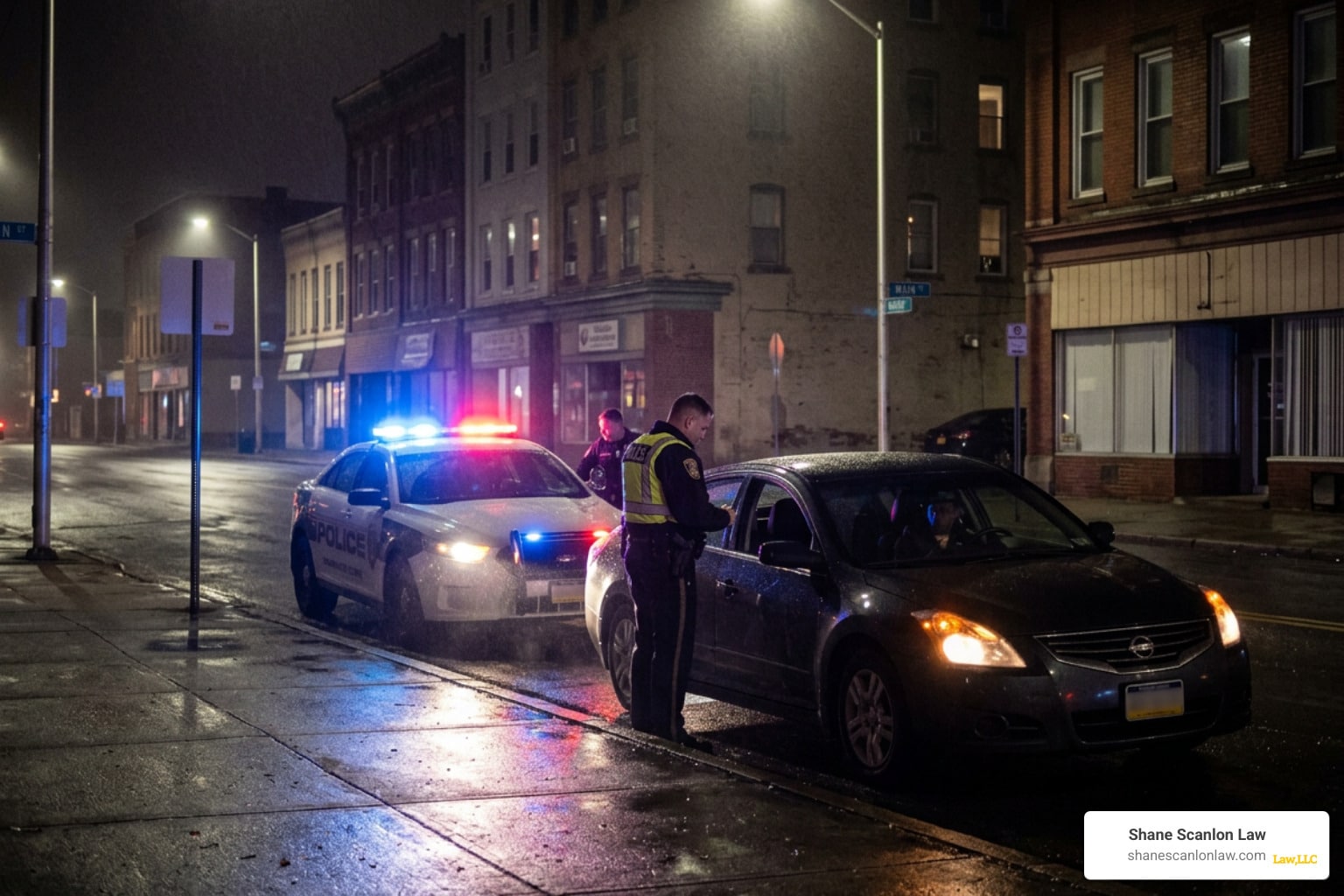
What to Do After a DUI Arrest in Lackawanna County, PA
If you need a DUI attorney in Lackawanna County, PA, here is what matters most right now:
- Call a lawyer immediately – before you speak to police or make any statements
- Do not assume guilt – DUI charges can often be reduced, dismissed, or diverted through programs like ARD
- Know your tier – Pennsylvania penalties depend on your BAC level and prior history
- Act fast – delays can limit your defense options and impact your license
A DUI arrest in Lackawanna County can feel like the ground dropping out from under you. One traffic stop on the Central Scranton Expressway or at a checkpoint near Montage Mountain, and suddenly you are facing fines, a suspended license, possible jail time, and a criminal record that follows you for years.
Pennsylvania’s DUI laws are tiered and complex. The penalties you face depend on your blood alcohol content, whether you have prior offenses, and the specific facts of your stop. Getting those details wrong — or navigating them without help — can cost you far more than you expect.
I’m Shane Scanlon. As a former Lackawanna County District Attorney and DUI attorney in Lackawanna County, PA with over 20 years of courtroom experience, I have seen these cases from both sides of the table. That insider knowledge is exactly what I bring to your defense.
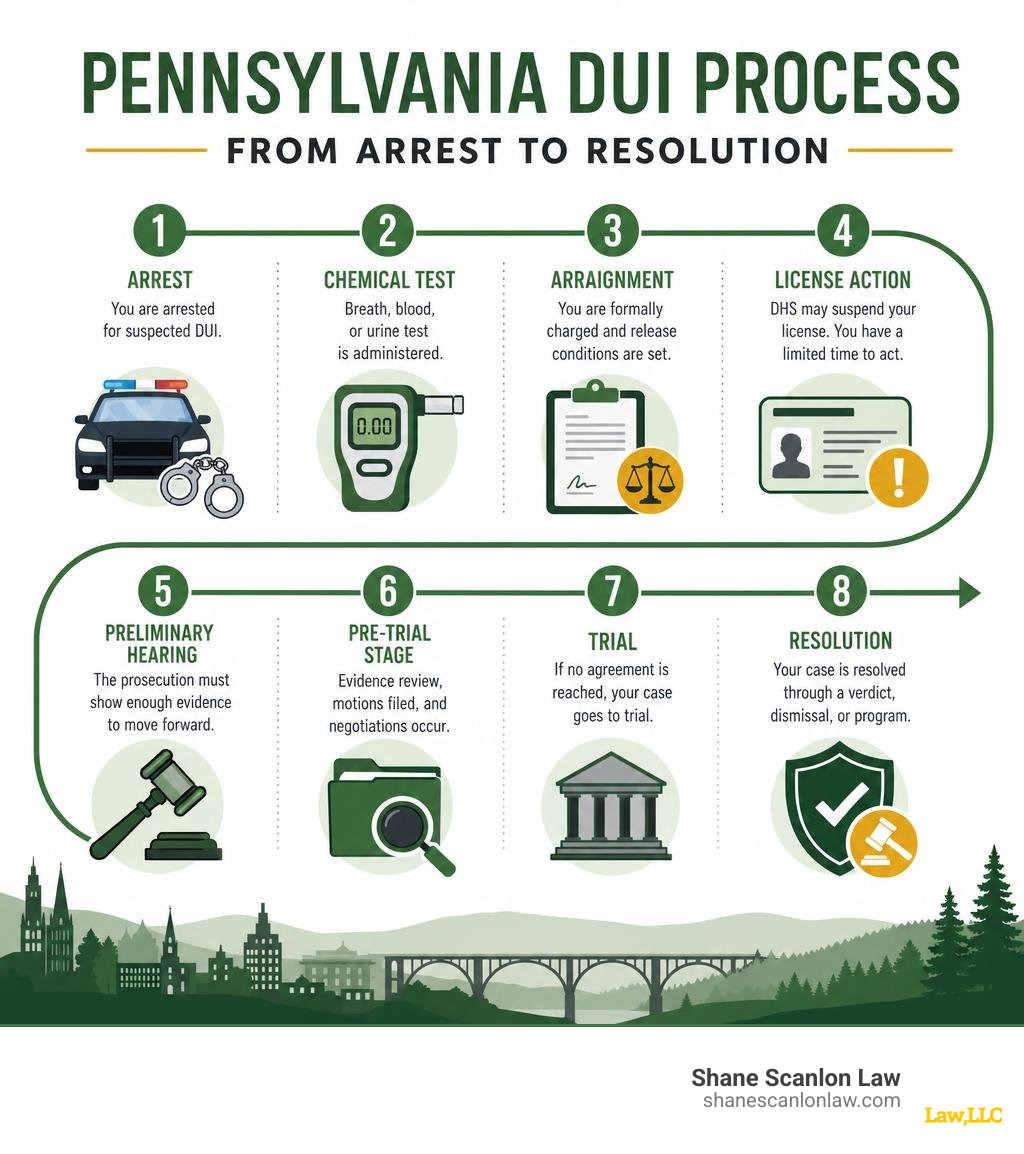
Dui attorney lackawanna county pa terms to remember:
Why You Need a DUI Attorney in Lackawanna County PA to Navigate Tiered Penalties
Pennsylvania does not treat all DUI charges the same. The Commonwealth uses a highly structured, three-tiered system based on your Blood Alcohol Concentration (BAC) at the time of driving. Because the law strictly dictates mandatory minimum penalties for each tier, trying to handle your case without an experienced DUI attorney in Lackawanna County, PA can leave you exposed to maximum sentences you might have otherwise avoided.
The three tiers of impairment in Pennsylvania are:
- General Impairment (BAC 0.08% to 0.099%): This tier also applies if your BAC is unknown, if you refuse testing, or if the officer can prove you were unsafe to drive regardless of your specific chemical test numbers.
- High Rate of Alcohol (BAC 0.10% to 0.159%): This tier also applies to commercial drivers (with a BAC of 0.04% or higher), school bus drivers (0.02% or higher), and minors under the age of 21 (0.02% or higher).
- Highest Rate of Alcohol (BAC 0.16% or higher): This tier carries the harshest penalties. It also automatically applies to anyone who refuses a chemical breath or blood test, or anyone driving under the influence of controlled substances (illegal drugs, prescription medications without a valid prescription, or even therapeutic levels of medical marijuana).
| BAC Tier | First-Offense Jail Time | First-Offense License Suspension | First-Offense Fines |
|---|---|---|---|
| General Impairment (0.08% – 0.099%) | None (Up to 6 months probation) | None | Up to $300 |
| High Rate (0.10% – 0.159%) | 48 hours to 6 months | 12 months | $500 to $5,000 |
| Highest Rate (0.16% + or Drugs) | 72 hours to 6 months | 12 months | $1,000 to $5,000 |
As you can see, the jump from General Impairment to the High or Highest Rate tiers introduces mandatory jail time and a year-long license suspension. We understand how devastating a driver’s license suspension can be for your career and family in Northeastern Pennsylvania. That is why understanding your rights is critical from day one. You can learn more about how these tiers impact your case in our guide on First Time DUI Charge in Pennsylvania: Your Legal Rights Explained.
First-Offense DUI Penalties in Scranton and Surrounding Areas
If you have a clean driving record and are facing your very first DUI charge, the penalties can still be incredibly disruptive. Even at the lowest tier (General Impairment), a conviction means up to six months of probation, a mandatory $300 fine, attendance at an Alcohol Highway Safety School (AHSS), and a court-ordered drug and alcohol evaluation to determine if you require substance abuse treatment.
For first-time offenders who land in the High Rate or Highest Rate categories, the stakes rise immediately. You face a mandatory minimum of 48 or 72 hours in jail, up to $5,000 in fines, and a 12-month driver’s license suspension.
Fortunately, first-time offenders in Scranton, Carbondale, Dunmore, and throughout Lackawanna County often have access to alternative pathways. Working with an experienced First Offense DUI Lawyer in Lackawanna County Pennsylvania is the most effective way to protect your freedom, minimize financial damage, and explore programs that keep a conviction off your permanent record.
Aggravated DUI and Repeat Offenses
If you have a prior DUI conviction within the last ten years, or if your case involves aggravating factors, Pennsylvania law escalates the charges and penalties rapidly. A second or third DUI offense is treated with extreme severity by local prosecutors and judges.
For example, a second-offense DUI in the High Rate tier carries a mandatory minimum of 30 days in jail, while a second offense in the Highest Rate tier requires a mandatory minimum of 90 days in jail. A third offense in the Highest Rate tier is graded as a third-degree felony, carrying a mandatory minimum of one year in state prison and up to seven years of total incarceration.
Other aggravating factors that can turn a standard DUI into an “Aggravated DUI” include:
- Causing an accident that results in bodily injury or significant property damage
- Having a minor child under the age of 14 in the vehicle at the time of the stop
- Operating a school vehicle or commercial truck while impaired
To understand how an accident or prior offenses can change the entire trajectory of your case, read our detailed breakdown on Aggravated DUI: Why Your Pennsylvania Charges Just Got Heavier.
The ARD Program: A Path to Dismissal for First-Time Offenders
For many individuals facing a first-time DUI charge in Lackawanna County, the Accelerated Rehabilitative Disposition (ARD) program represents the best possible resolution. ARD is a pre-trial diversionary program designed for first-time, non-violent offenders.
Instead of going through a trial or pleading guilty, you enter a period of court-supervised probation. If you successfully complete all the requirements of the ARD program, your original DUI charges are completely dismissed, and you become eligible to have your arrest record expunged. This means you can truthfully state on job applications and background checks that you have never been convicted of a crime.
However, entry into the ARD program is not automatic. To qualify for ARD in Lackawanna County, you must meet several strict requirements:
- You must have no prior criminal convictions or prior ARD placements within the past 10 years.
- There must have been no serious bodily injury or death resulting from an accident related to your DUI.
- You must not have had a child under the age of 14 in your vehicle at the time of your arrest.
- You must have possessed a valid driver’s license at the time of the stop.
- You must submit to and pass all required drug and alcohol evaluations.
To learn more about how local courts evaluate these criteria, see our guide on DUI Charges in Lackawanna County, PA.
How a DUI Attorney in Lackawanna County PA Secures ARD Admission
Securing admission into the ARD program is not as simple as filling out a form. Under Pennsylvania law, the District Attorney’s office has sole, unreviewable discretion over who is admitted into the program. If the DA denies your application, you cannot appeal that decision to a judge unless you can prove the denial was based on unlawful discrimination.
This is where having a DUI attorney in Lackawanna County, PA with deep local roots makes a massive difference. Because we understand the local court rules and have decades of experience working directly with the Lackawanna County District Attorney’s office, we know exactly how to package and present your ARD application. We highlight your character, your professional standing, and your commitment to rehabilitation to present you in the best possible light. We advocate fiercely to ensure minor technicalities do not stand between you and a clean record.
Chemical Test Refusals and the Pennsylvania Implied Consent Law
When you are pulled over on suspicion of driving under the influence in Pennsylvania, the officer will likely ask you to submit to a chemical test—usually a breathalyzer or a blood draw. Under Pennsylvania’s Implied Consent Law (75 Pa.C.S.A. § 1547), simply by holding a Pennsylvania driver’s license and operating a vehicle on public roads, you have already consented to chemical testing if an officer has reasonable grounds to believe you are driving under the influence.
If you refuse to submit to this chemical test, you face immediate, severe consequences that are entirely separate from your criminal court case:
- Automatic License Suspension: PennDOT will automatically suspend your driver’s license for 12 months for a first refusal, or 18 months if you have a prior DUI conviction or a prior chemical test refusal on your record. This suspension occurs even if your criminal DUI charges are eventually dismissed or you are found not guilty in court.
- Highest Tier Penalties: In the criminal court, a chemical test refusal automatically places you into the Highest Rate BAC tier. This means you face the harshest possible criminal penalties, including a mandatory minimum of 72 consecutive hours in jail and a $1,000 minimum fine if convicted.
- The DL-26 Form: Before a refusal can be legally enforced, the arresting officer must read you the DL-26 warning form. This form explicitly warns you of the administrative and criminal consequences of refusing. If the officer failed to read this form to you clearly, or if you did not understand it due to a language barrier or medical emergency, we can use that failure to challenge your license suspension.
To explore specific strategies for contesting blood tests and refusals, read our in-depth analysis of DUI Blood Test Defense in Lackawanna County.
Ignition Interlock Device (IID) Requirements and Costs
If your license is suspended due to a high-BAC DUI conviction or a chemical test refusal, you do not necessarily have to be completely grounded. Pennsylvania allows many drivers to apply for an Ignition Interlock Limited License (IILL). This restricted license allows you to drive, but only in a vehicle equipped with an Ignition Interlock Device (IID).
An IID is a breathalyzer wired directly into your vehicle’s ignition system. Before your car will start, you must blow into the device. If it detects alcohol on your breath, the engine will not turn over. The device also requires random “rolling retests” while you are driving to ensure you remain sober.
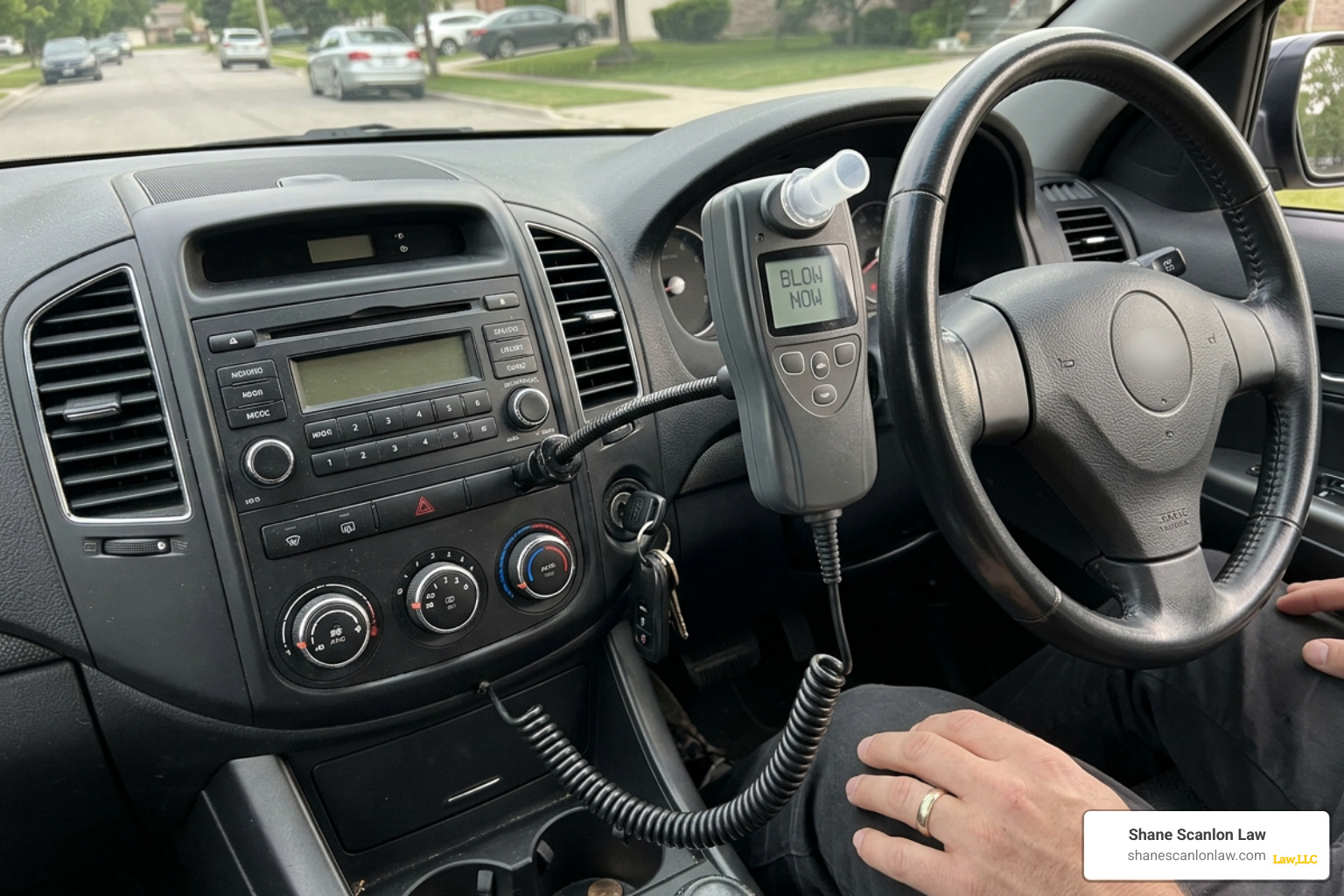
While the IID provides a lifeline to keep you driving to work, school, or medical appointments, it comes with significant personal and financial burdens:
- Installation and Lease Costs: You are responsible for all costs associated with the device. Installation typically costs between $100 and $200, and you must pay a monthly leasing and calibration fee of $75 to $150 per vehicle.
- PennDOT Restoration Fees: You must pay PennDOT restoration fees to get your restricted license, and you must maintain the device for at least one full year before your unrestricted driving privileges can be restored.
To see how these rules apply across county lines, check out our guide on DUI Penalties and License Suspension in Luzerne County.
How Local Courts in Scranton and Lackawanna County Handle DUI Cases
The criminal court system can feel like a maze, especially if you have never been arrested before. In Lackawanna County, DUI cases follow a very specific progression through the local court system.
Your case will begin at the Magisterial District Court level. There are several district courts spread throughout Scranton, Dunmore, Carbondale, and other municipalities in Lackawanna County.
- The Preliminary Hearing: This is the first major milestone in your case, typically held at the Central Court in the Lackawanna County Courthouse in Scranton. At this hearing, the prosecution does not have to prove you are guilty beyond a reasonable doubt. They only need to establish “prima facie” evidence—meaning they must show that a crime was committed and that there is a reasonable probability you were the one who committed it. This is a crucial opportunity for your defense attorney to cross-examine the arresting officer, lock in their testimony, and identify weaknesses in the state’s evidence.
- Formal Arraignment: If your case is held for court at the preliminary hearing, it moves up to the Court of Common Pleas. At your formal arraignment, you will receive the official written charges (the Criminal Information) and enter a preliminary plea of not guilty.
- Pretrial Conferences and Motions: Before a trial takes place, we will file pretrial motions to suppress evidence if we believe your constitutional rights were violated. We will also participate in pretrial conferences to negotiate with the District Attorney for a reduced charge, ARD admission, or alternative sentencing like house arrest with electronic monitoring.
Navigating these steps successfully requires a deep understanding of local court procedures. You can compare local legal resources and view directory listings of Best DUI Lawyers in Lackawanna County, PA – Justia to understand the local legal landscape.
Challenging the Prosecution’s Evidence in Court
A DUI arrest is not an automatic conviction. The prosecution’s case relies heavily on the technical accuracy of police procedures, chemical testing equipment, and human observation. As your defense team, we examine every single detail of your stop and arrest to find errors that can lead to a reduction or complete dismissal of your charges.
Some of the most common and effective ways we challenge DUI evidence include:
- Challenging the Initial Traffic Stop: Police officers cannot pull you over on a hunch. They must have “reasonable suspicion” of a traffic violation or “probable cause” of criminal activity. If the officer pulled you over without a valid legal reason, any evidence they gathered after the stop—including your BAC results—can be thrown out of court.
- Questioning Field Sobriety Tests: Roadside physical tests (like the one-leg stand or the walk-and-turn) are highly subjective. Medical conditions, inner ear issues, poor lighting, uneven pavement, bad weather, or even wearing high heels can cause a completely sober person to fail.
- Attacking Chemical Test Accuracy: Breathalyzer machines must be calibrated and maintained according to strict state regulations. Blood draws must follow a rigid chain of custody and be performed by qualified medical professionals within two hours of you driving. If the police cut corners, the test results may be deemed inadmissible.
To learn more about how we dissect the prosecution’s case to protect your future, read our detailed guide on How a DUI Lawyer Can Help Reduce or Dismiss Your DUI Charge.
Frequently Asked Questions About Lackawanna County DUIs
We know you have questions. Here are clear, straightforward answers to some of the most common questions we hear from clients in Scranton and the surrounding areas.
How long does a DUI stay on your record in Pennsylvania?
In Pennsylvania, a DUI conviction stays on your criminal record permanently. It does not simply “fall off” after a few years.
However, there are exceptions. If you successfully complete the ARD program, your attorney can petition the court to have your arrest record expunged, effectively wiping it clean. Additionally, Pennsylvania has a 10-year “lookback period” for sentencing. This means that if you get a second DUI more than 10 years after your first, the court will sentence you as a first-time offender rather than a repeat offender.
If you are facing charges in neighboring areas, you can explore regional directory resources like the Best DUI Lawyers in Luzerne County, PA – Justia to see how local attorneys handle records and expungements.
What is the difference between a breathalyzer and a blood test?
While both tests measure your BAC, they do so in very different ways. A breathalyzer estimates your blood alcohol level by measuring the alcohol vapor in your breath. It is highly convenient for roadside testing but is prone to errors caused by “mouth alcohol” (from recent burping, vomiting, or using mouthwash) or calibration drift.
A blood test directly measures the concentration of alcohol in your bloodstream. It is generally far more accurate and is required if the police suspect you are under the influence of drugs or medical marijuana. However, blood tests are highly invasive and must be conducted under strict medical and legal protocols. If those protocols are violated, the results can be challenged.
For residents in nearby rural counties, you can review how local legal professionals approach these testing differences by looking at the Best DUI Lawyers in Wyoming County, PA – Justia .
How do I choose the best DUI attorney in Lackawanna County PA?
Choosing the right attorney to handle your DUI is one of the most important decisions you will make. You should look for several key qualities:
- Local Courtroom Experience: Every county handles DUIs a little differently. You need an attorney who knows the local judges, the prosecutors, and the specific court procedures in Lackawanna County.
- A Strong Trial Record: Your attorney should be a skilled litigator who is not afraid to take your case to trial if the prosecution refuses to offer a fair resolution.
- A Former Prosecutor’s Perspective: An attorney who has worked as a prosecutor understands how the state builds its cases—and where the cracks in those cases are most likely to hide.
Conclusion
When your future, your driver’s license, and your freedom are on the line, you cannot afford to leave your defense to chance. A DUI charge in Scranton, Wilkes-Barre, or any of the surrounding communities in Northeastern Pennsylvania requires immediate, aggressive, and highly localized representation.
At Shane Scanlon Law, we bring more than 20 years of dedicated legal experience to your side of the courtroom. As a former Lackawanna County District Attorney, I know the strategies the prosecution will use, and I know exactly how to counter them to protect your rights, your career, and your family.
Whether we are fighting to get you admitted into the ARD program, challenging the validity of a traffic stop, or litigating a chemical test refusal, we are committed to standing by you every step of the way. If you or a loved one has been arrested, do not wait. Contact our team today to secure the dedicated representation of a seasoned DUI Lawyer in Scranton, PA. We are proud to serve clients across Lackawanna, Luzerne, Susquehanna, and Wyoming Counties. Let us help you find your path forward.