
 Call Anytime
833.722.6566
Call Anytime
833.722.6566
The Pennsylvania PFA Process Explained

When You Need Legal Protection: Understanding the Pennsylvania PFA Process
Knowing how to file a PFA in Pennsylvania could be one of the most important steps you take to protect yourself or your children from abuse.
Here’s a quick overview of how to file a PFA in Pennsylvania:
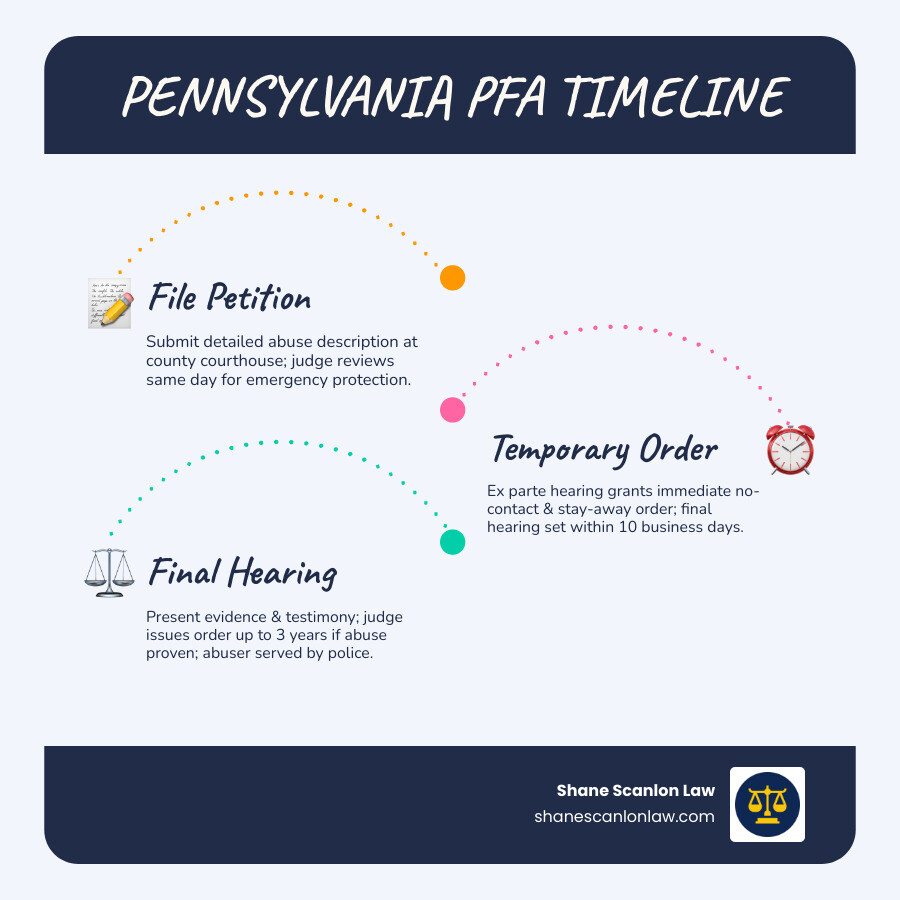
- Go to your county courthouse — Visit the family court or PFA office during business hours (or contact police for after-hours emergencies).
- Complete the petition — Describe the abuse in detail and request the protections you need.
- See a judge the same day — A judge reviews your petition and may grant a temporary PFA order immediately.
- Attend the final hearing — Scheduled within 10 business days, this is where a judge decides on a final order lasting up to 3 years.
- The abuser is served — Law enforcement delivers the order to the defendant.
There is no filing fee to file a PFA in Pennsylvania.
If you are in immediate danger, call 911. A PFA order can remove an abuser from your home, restrict contact, address custody, and require the surrender of firearms — all without you paying a dime to the court.
The legal process can feel overwhelming, especially when you are already dealing with fear and uncertainty. Understanding each step before you walk into that courthouse makes a real difference.
I’m Shane Scanlon, a Pennsylvania trial lawyer with over 20 years of courtroom experience, including time as Lackawanna County District Attorney — and I’ve seen how knowing how to file a PFA in Pennsylvania empowers survivors to take back control. In this guide, I’ll walk you through every step of the process clearly and simply.
What Is a PFA in Pennsylvania and Who Can File?
A Protection From Abuse order, usually called a PFA, is a court order designed to protect someone from abuse by a family member, intimate partner, household member, or certain other qualifying people under Pennsylvania law. The person asking for protection is the plaintiff. The person accused of abuse is the defendant.
In plain English: a PFA is Pennsylvania’s legal tool for telling an abuser, “Stop, stay away, and the police can enforce this.”
What a Protection From Abuse order does
A PFA can do a lot more than just say “no contact.” Depending on the facts, a judge can order protections such as:
- No abuse, harassment, stalking, or threats
- No contact in person, by phone, text, email, social media, or through other people
- Stay away from your home, job, school, or other locations
- Removal of the defendant from a shared residence
- Temporary custody provisions for children
- Surrender of firearms, weapons, and ammunition
- Police enforcement if the order is violated
For a broader overview, see Protection from Abuse (PFA).
Who is eligible to file for a PFA in Pennsylvania
Not every conflict qualifies for a PFA. In Pennsylvania, PFAs generally apply when the abuse involves:
- A current or former spouse
- A current or former intimate or dating partner
- A person with whom you share a child
- A family member by blood or marriage
- A current or former household member
- A minor child, through a parent, adult household member, or guardian in appropriate situations
That last point matters. If the issue involves abuse by someone outside these relationships, another kind of protective order may be more appropriate, such as a sexual violence protection order or intimidation order for child victims. The Pennsylvania courts’ Protection Orders page explains those categories.
What types of abuse qualify for a PFA
Abuse is not limited to bruises and broken lamps. Pennsylvania law can cover a range of conduct, including:
- Causing bodily injury
- Attempting to cause bodily injury
- Placing someone in reasonable fear of imminent serious bodily injury
- Sexual abuse or sexual violence
- False imprisonment
- Stalking or repeated conduct creating fear
- Abuse of minor children in qualifying circumstances
Evidence matters. Judges often look for specific facts: dates, threats, injuries, police involvement, messages, photos, witnesses, and medical treatment. The more concrete your petition, the stronger it usually is.
How to File a PFA in Pennsylvania: Where to Go and What to Bring
In most Pennsylvania counties, you start at the county courthouse, family court, prothonotary, or a dedicated PFA office during business hours. In our region, procedures can vary by county, so it is smart to confirm where to go before you leave home.
There is no filing fee for plaintiffs seeking a PFA.
How to file a PFA in Pennsylvania at the courthouse
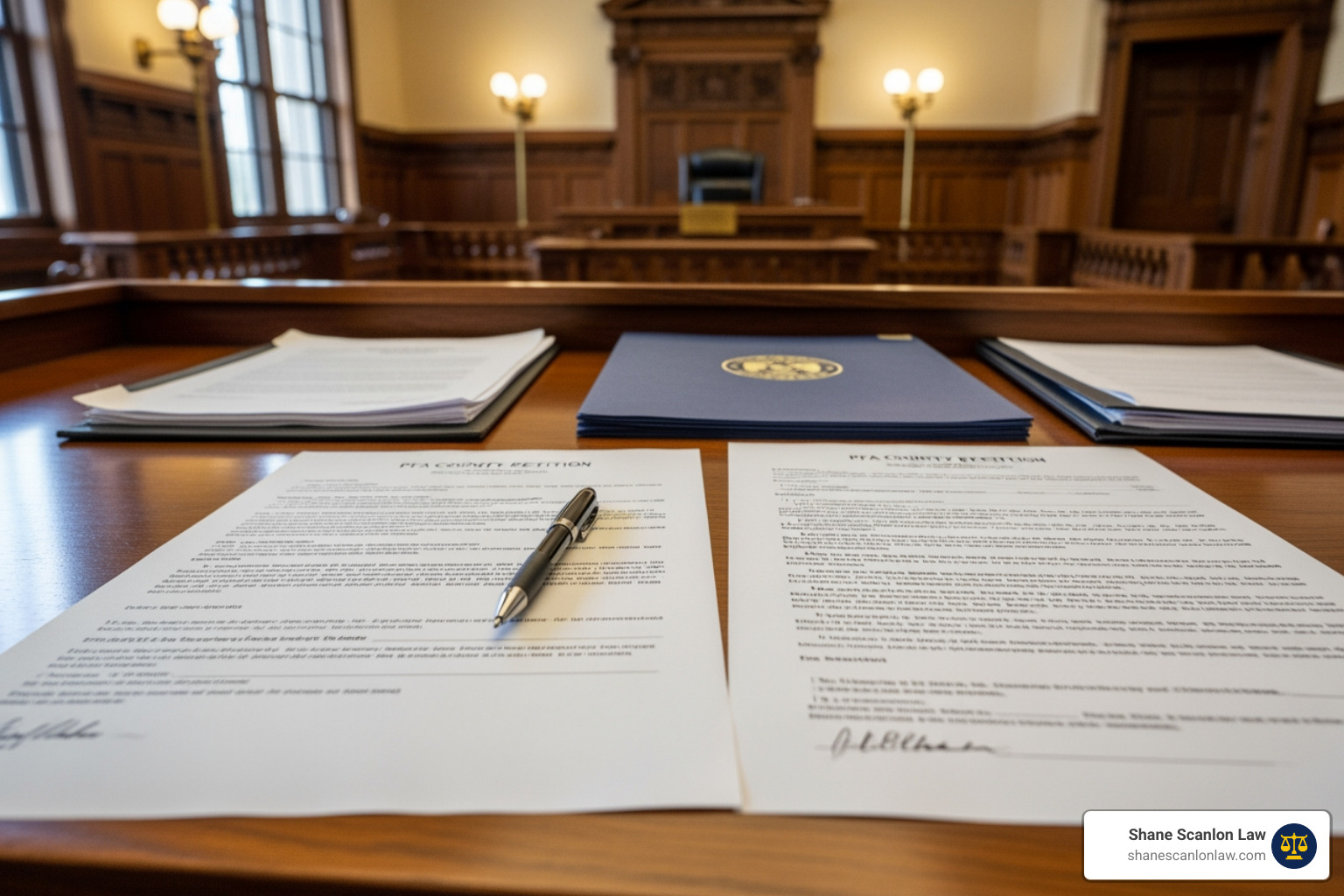
If you are wondering exactly how to file a PFA in Pennsylvania, the courthouse filing process usually looks like this:
- Go to the proper office in your county courthouse.
- Ask for a Protection From Abuse petition.
- Complete the paperwork under oath.
- Describe the abuse in clear, specific detail.
- List the protections you want, such as no contact, removal from the home, custody terms, or firearm surrender.
- A judge may review your petition the same day.
- If immediate protection is warranted, the judge may enter a temporary order.
For statewide background on the court process, review Protection Orders.
If the abuse happens after court hours, emergency protection may still be available through an on-call judge or magisterial process, often with police assistance. Emergency orders generally last until the close of business on the day the court reopens.
What information and evidence to gather before filing
You do not need a perfect stack of evidence to ask for help, but bringing useful information can make filing smoother and your case stronger.
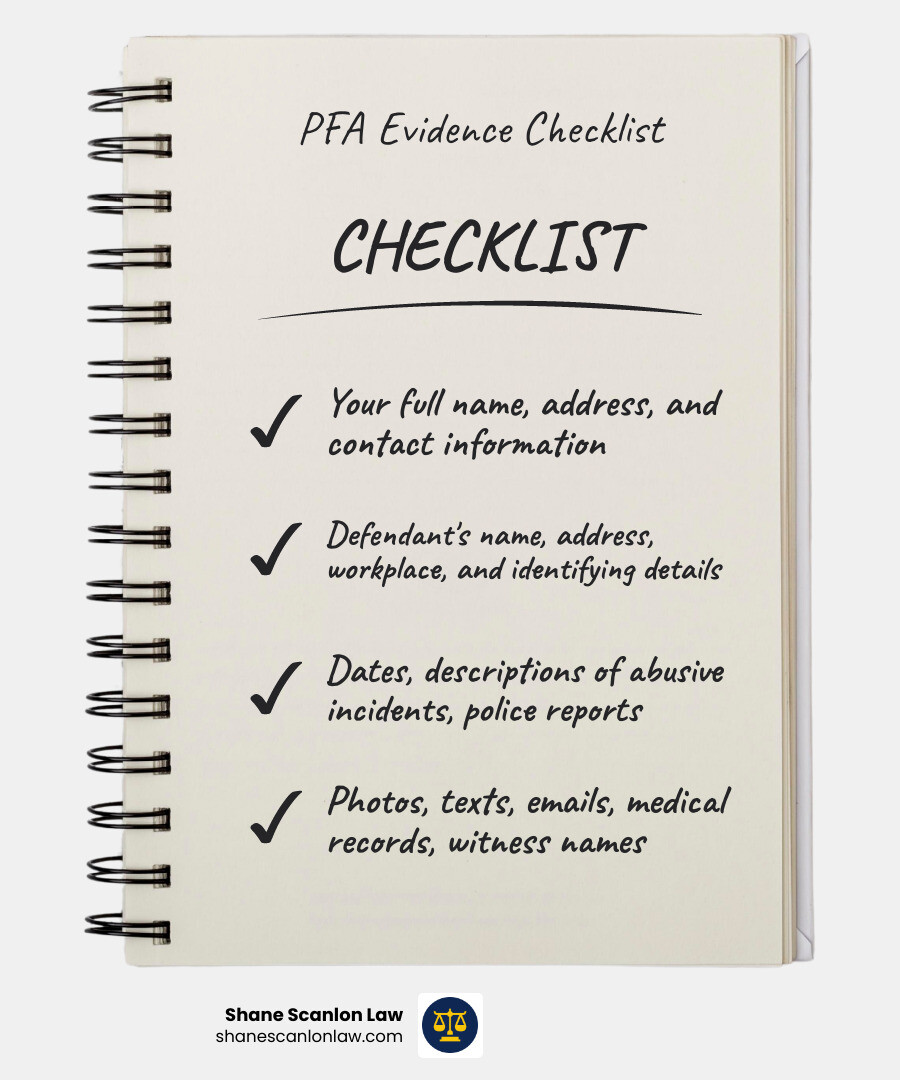
Try to gather:
- Your full name, address, and contact information
- The defendant’s full name, address, workplace, and identifying details
- Dates and descriptions of abusive incidents
- Recent threats or violent acts
- Police reports or incident numbers
- Photos of injuries or property damage
- Text messages, emails, voicemails, or social media messages
- Medical records, if any
- Names of witnesses
- Information about children involved
- Information about firearms or weapons the defendant may have
A helpful self-help resource is this Pennsylvania PFA self-help guide.
Can minors file and do county rules differ?
Yes, minors can be involved in PFA cases, but the rules are more complicated. A parent, guardian, or adult household member often files on the minor’s behalf. In some situations, a minor may be able to seek protection with court involvement and adult assistance.
County rules also differ in practical ways, including:
- Office location inside the courthouse
- Filing hours
- Whether there is a dedicated PFA unit
- Local paperwork instructions
- Interpreter access
- ADA accessibility procedures
- Sheriff service procedures
That is especially important in Northeastern Pennsylvania. Procedures in Scranton, Wilkes-Barre, Susquehanna County, and Wyoming County may not be identical, even though the same Pennsylvania law applies. For county-specific reading, see Protection from Abuse in Lackawanna County, Protection from Abuse in Luzerne County, and Protection from Abuse in Wilkes-Barre, PA.
Step-by-Step: How to File a PFA in Pennsylvania From Petition to Final Order
Once you file, the case usually moves quickly. That is good for safety, but it can also feel like drinking from a fire hose. Here is the process, step by step.
Step 1: Complete the petition and request immediate protection
Your petition is the foundation of the case. This is where you explain:
- Who the defendant is
- How you are related or connected
- What abuse occurred
- When it happened
- Why you fear future abuse
- What protection you need right now
Be specific. “He threatened me on May 2 and said he would kill me if I left” is stronger than “He is mean.” Courts need facts, not adjectives.
If the situation is urgent, you can ask for immediate protection before the defendant is present. This is called ex parte review. The judge hears only your side at that stage and decides whether temporary protection is needed until the full hearing.
Step 2: Temporary and emergency orders — what happens first
Pennsylvania uses different kinds of protective orders depending on timing and urgency.
| Order type | When used | How long it lasts |
|---|---|---|
| Emergency PFA | After hours, weekends, holidays | Until close of business on the day the court reopens |
| Temporary PFA | After filing and same-day judge review | Until the final hearing, usually about 10 business days |
| Final PFA | After notice and hearing | Up to 3 years |
The final hearing is generally scheduled within 10 business days of the temporary order hearing. Temporary orders are designed to bridge the gap between immediate danger and the full hearing.
For more on the filing stage, read Filing and Obtaining a PFA Order.
Step 3: Service on the abuser and preparing for the final hearing
After a temporary or emergency order is entered, the defendant must be formally served. Usually, law enforcement or the sheriff handles service. You should not try to serve the defendant yourself.
Service usually includes:
- The petition
- The temporary order, if one was granted
- Notice of the final hearing date, time, and location
If the defendant is hard to locate, tell court staff or law enforcement any information that may help. An incorrect address can delay the case.
While waiting for the final hearing, prepare carefully:
- Organize your photos, messages, and records
- Print screenshots if possible
- Subpoena witnesses if necessary
- Bring medical or police documentation
- Make a timeline of events
- Think through what relief you want the judge to order
This is where legal guidance can help a lot, especially if the other side denies the allegations or plans to fight hard at the hearing.
Step 4: What happens at the final hearing
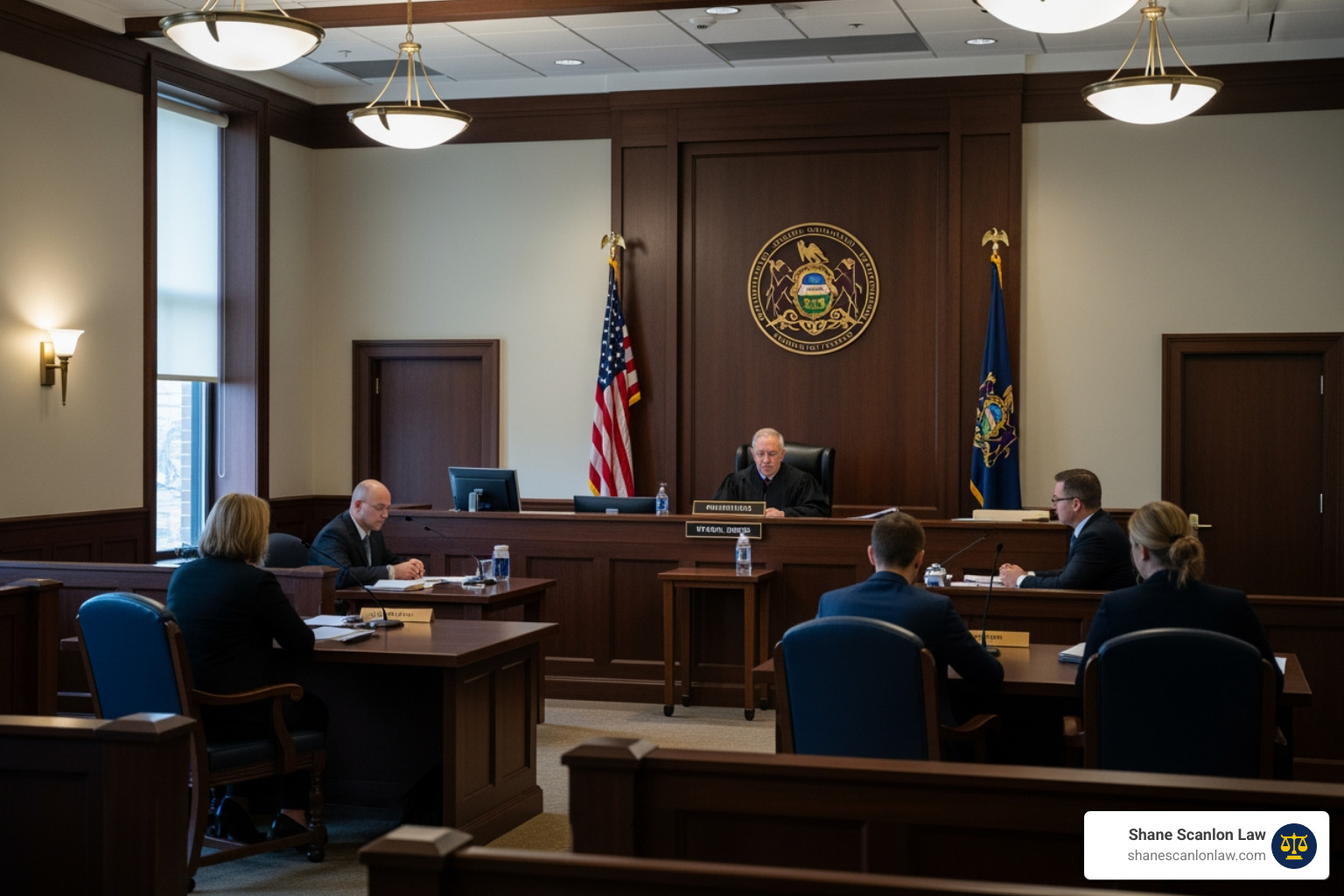
The final hearing is the main event. Both sides can appear, testify, present evidence, and question witnesses. The judge listens, weighs credibility, and decides whether to grant a final PFA.
At the hearing:
- You testify under oath
- The defendant can testify
- Each side may offer documents, photos, and other evidence
- Witnesses may be called
- The judge may ask direct questions
- Cross-examination may occur
Possible outcomes include:
- A final PFA is granted
- The case is dismissed
- The hearing is continued to another date
- The parties agree to certain terms in some cases
A final PFA may remain in effect for up to 3 years.
For a deeper look at hearing procedure, see PFA Hearing Process: From Petition to Final Order.
What Protections a Pennsylvania PFA Can Provide
A Pennsylvania PFA can be surprisingly broad. It is not just a paper shield. If drafted well and enforced properly, it can create real, practical distance between a survivor and an abuser.
A PFA may provide:
- No abuse or threatening conduct
- No direct or indirect contact
- Stay-away provisions for home, work, school, or other places
- Exclusive possession of the home in some cases
- Eviction of the defendant from a shared residence
- Temporary custody terms
- Child support or financial-related relief in some circumstances
- Firearm surrender
- Protection for children
- Protection related to school or workplace safety
- Relief involving pets in appropriate cases
How long emergency, temporary, and final PFAs last
Here is the practical timeline:
- Emergency PFAs usually last until the close of business on the day the court reopens
- Temporary PFAs stay in effect until the final hearing
- The final hearing is typically set within 10 business days
- Final PFAs can last up to 3 years
If circumstances change, it may be possible to ask the court to modify or terminate an order. For that topic, see Modifying or Terminating a PFA.
Costs, enforcement, and what to do if the order is violated
One of the most important facts for survivors is this: there are no filing fees or court costs assessed to plaintiffs for bringing a PFA action.
If the defendant violates the order:
- Call 911 right away if you are in danger.
- Tell police there is a PFA in place.
- Keep copies of the order with you if possible.
- Save proof of the violation, such as texts, call logs, photos, videos, or witness names.
- Report every violation, even if it seems “small.”
Violating a PFA can lead to contempt proceedings, arrest, fines up to $1,000, and up to six months in jail.
For more on this issue, see Enforcement of a PFA Order. If you are dealing with accusations of violating a PFA, this page may also help: PFA Violation Defense Lawyer in Northeast Pennsylvania.
Is a Pennsylvania PFA valid in other counties or states?
Yes. A Pennsylvania PFA is enforceable statewide, including across county lines. So if your order was issued in Lackawanna County and you travel to Luzerne, Susquehanna, or Wyoming County, local police can still enforce it.
PFAs may also be enforceable in other states under full faith and credit principles. That means the order does not stop working just because someone drives over a state line and pretends geography is magic.
It is wise to keep certified copies with you and provide copies to:
- Your local police department
- Your child’s school or daycare
- Your employer or building security
- Trusted relatives or friends
For related statewide information, see Request a Protection Order for Crime Victims.
Frequently Asked Questions About How to File a PFA in Pennsylvania
Do you need a lawyer to file a PFA in Pennsylvania?
No. You do not need a lawyer to file a PFA. Many people start the process on their own through the courthouse.
That said, having a lawyer can be very helpful if:
- The facts are disputed
- There are children involved
- The defendant has a lawyer
- The hearing is likely to be contested
- There are related criminal charges
- You need a carefully tailored order
- You are defending against false allegations
Our firm regularly handles contested hearings and related litigation in Northeastern Pennsylvania. You can also explore Protection from Abuse Orders: A Step-by-Step Guide and PFA Explained: Everything You Need to Know About Protection Orders in Pennsylvania.
How to file a PFA in Pennsylvania if the abuse happened after court hours
If the courthouse is closed and you need immediate protection:
- Call 911 if you are in danger
- Tell police you want emergency protection
- Ask about the emergency PFA process in your county
- Be prepared to explain the immediate risk
- Follow up at the courthouse on the next business day if required
Emergency PFAs are meant to cover the gap until the court reopens. They are short-term but extremely important.
If you are on the defense side of an emergency or temporary order, you may also want to review Emergency and Temporary PFA Defense in Northeast Pennsylvania.
Where can you get help with a PFA petition and safety planning?
You do not have to navigate this alone. Help may be available from:
- Courthouse PFA staff
- Domestic violence advocates
- Local shelters
- Legal aid or legal services organizations
- Victim-witness offices
- Law enforcement
- Private attorneys
A strong safety plan might include changing locks, documenting incidents, adjusting school pickup procedures, saving emergency contacts, and telling trusted people about the order.
This Pennsylvania PFA self-help guide is a useful place to start.
Conclusion
If you are trying to figure out how to file a PFA in Pennsylvania, the main steps are straightforward: go to the courthouse, complete the petition, ask for immediate protection if needed, make sure the defendant is served, and attend the final hearing.
After an order is entered, keep certified copies, document every violation, and call police if the defendant breaks the order. Small violations have a bad habit of becoming big ones.
If you need guidance with filing, defending, modifying, or enforcing a PFA in Scranton, Lackawanna County, Wilkes-Barre, Luzerne County, Susquehanna County, or Wyoming County, we are here to help. At Shane Scanlon Law, we bring deep courtroom experience and local knowledge to these urgent, high-stakes cases.
For more information, visit Protection from Abuse (PFA).