
 Call Anytime
833.722.6566
Call Anytime
833.722.6566
The Ultimate Pennsylvania PFA Survival Guide
What a PFA Order in Pennsylvania Actually Means (And Why It Matters)
What is a PFA order in Pennsylvania? Here’s the short answer:
A Protection from Abuse (PFA) order is a civil court order issued by a Pennsylvania judge that legally prohibits an abuser from contacting, harassing, or harming a victim — and can remove them from a shared home, restrict their access to children, and force them to surrender firearms.
Key facts at a glance:
- Issued by: A Family Division judge in the Court of Common Pleas
- Who it protects: Victims of domestic abuse from a spouse, partner, family member, or household member
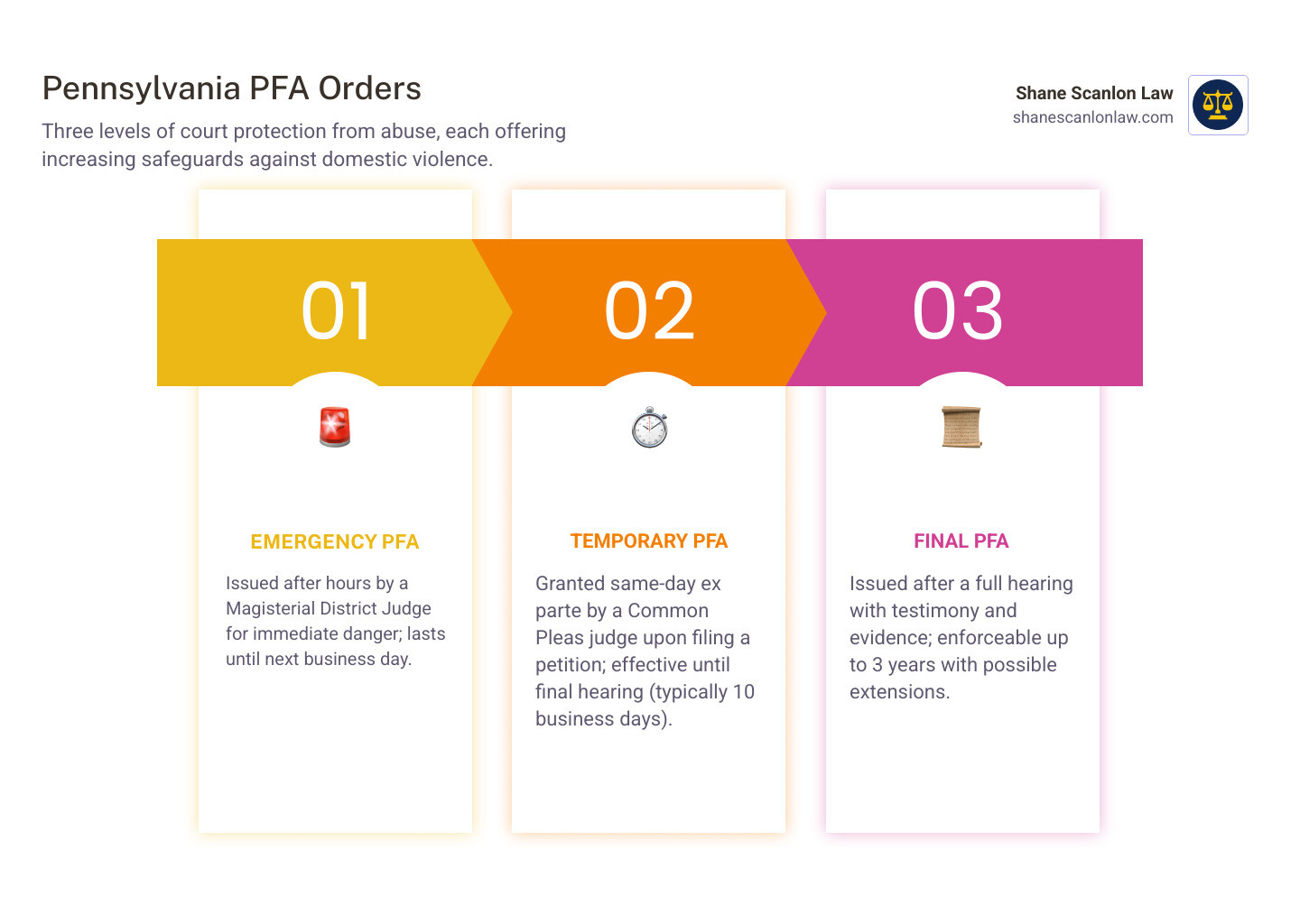
- How fast: A temporary order can be granted the same day you file — or even after hours in an emergency
- How long: A final PFA order can last up to 3 years
- Cost to file: Free — there is no filing fee for victims
Every year in Pennsylvania, tens of thousands of people turn to the courts for protection. In 2023 alone, over 41,000 PFA petitions were filed statewide. Behind each one is a person trying to feel safe again.
Whether you are considering filing for protection or you have just been served with an order, understanding how this process works is critical. The stakes — your safety, your children, your home, your rights — are too high to navigate blind.
I’m Shane Scanlon, founder of Shane Scanlon Law, LLC and a former Lackawanna County District Attorney with over 20 years of Pennsylvania courtroom experience, including extensive involvement in cases where what is a PFA order in Pennsylvania is exactly the question that needed answering. In the guide below, I’ll walk you through everything you need to know — clearly and without the legal jargon.
What Is a PFA Order in Pennsylvania?
At its core, the Protection From Abuse Act (23 Pa.C.S. 6101) was designed to provide victims of domestic violence with a faster, more effective way to get help than the traditional criminal justice system might allow.
While a PFA is a civil order, it is often described as “quasi-criminal.” This is because the process starts in civil Family Court, but if the order is violated, the consequences turn criminal very quickly. We see this daily in our work across Lackawanna and Luzerne counties; the court uses its civil authority to create a “safety bubble” around a victim, backed by the power of the police to make immediate arrests if that bubble is breached.
What is a PFA order in Pennsylvania and what does it do?
When we talk about what is a pfa order in pennsylvania, we are talking about a powerful legal shield. A judge has the authority to order an abuser to stop all contact. This doesn’t just mean “don’t hit me.” It means:
- No calling, texting, or emailing.
- No “drive-bys” or showing up at your workplace.
- Eviction from a shared residence (even if the abuser’s name is the only one on the lease or deed).
- Temporary custody of children to ensure their safety.
What is a PFA order in Pennsylvania compared with other protection orders?
Pennsylvania offers different types of protection orders depending on the relationship and the crime. It is easy to get them confused.
- PFA (Protection From Abuse): Requires a specific domestic relationship (family or intimate partner).
- SVPO (Sexual Violence Protection Order): For victims of sexual violence who do not have a domestic relationship with the perpetrator.
- PFI (Protection From Intimidation): Specifically for minors being stalked or harassed by an adult (over 18) who is not a family member.
Who can file and who can be named in a PFA case?
You cannot get a PFA against a random stranger or a neighbor you simply don’t like. To qualify, the person you are filing against must be:
- A current or former spouse.
- A current or former sexual/intimate partner (dating or lived together).
- A family member related by blood or marriage.
- Someone with whom you share a child.
This includes same-sex couples and household members. If you are being harassed by someone outside of these categories, you may need to look into an SVPO or traditional criminal harassment charges.
Who Qualifies and What Counts as Abuse Under Pennsylvania Law?
In our experience serving Scranton and Wilkes-Barre, many people hesitate to file because they think “he didn’t actually hit me.” However, Pennsylvania law defines abuse much more broadly than just physical strikes.
What behavior qualifies as abuse for a Pennsylvania PFA?
Under the law, “abuse” includes:
- Physical Injury: Attempting to cause or intentionally causing bodily injury.
- Fear of Harm: Placing another in fear of “imminent serious bodily injury” (this includes verbal threats where you believe you are about to be hurt).
- False Imprisonment: Forcing you to stay in a room or home against your will.
- Sexual Assault: Any form of non-consensual sexual contact or rape.
- Stalking: A pattern of conduct (repeated acts) that places you in reasonable fear of bodily injury.
When a PFA may not be the right order
A PFA is not a “catch-all” for every argument. If a neighbor’s dog is barky or a stranger is being rude, a PFA won’t apply. It is also not supposed to be used as a strategic “weapon” in a standard custody dispute where no abuse has occurred. If a court finds a PFA was filed in “bad faith” (with a dishonest purpose), the person who filed it could be forced to pay the other person’s legal fees.
| Feature | PFA | SVPO | PFI |
|---|---|---|---|
| Relationship Needed | Domestic/Intimate | None Required | None (Adult vs. Minor) |
| Primary Goal | Stop Domestic Abuse | Stop Sexual Violence | Stop Stalking/Harassment |
| Max Duration | 3 Years | 3 Years | 3 Years |
What evidence helps prove abuse at a hearing?
Because the burden of proof is a “preponderance of the evidence” (meaning it is “more likely than not” that the abuse happened), documentation is your best friend. We recommend gathering:
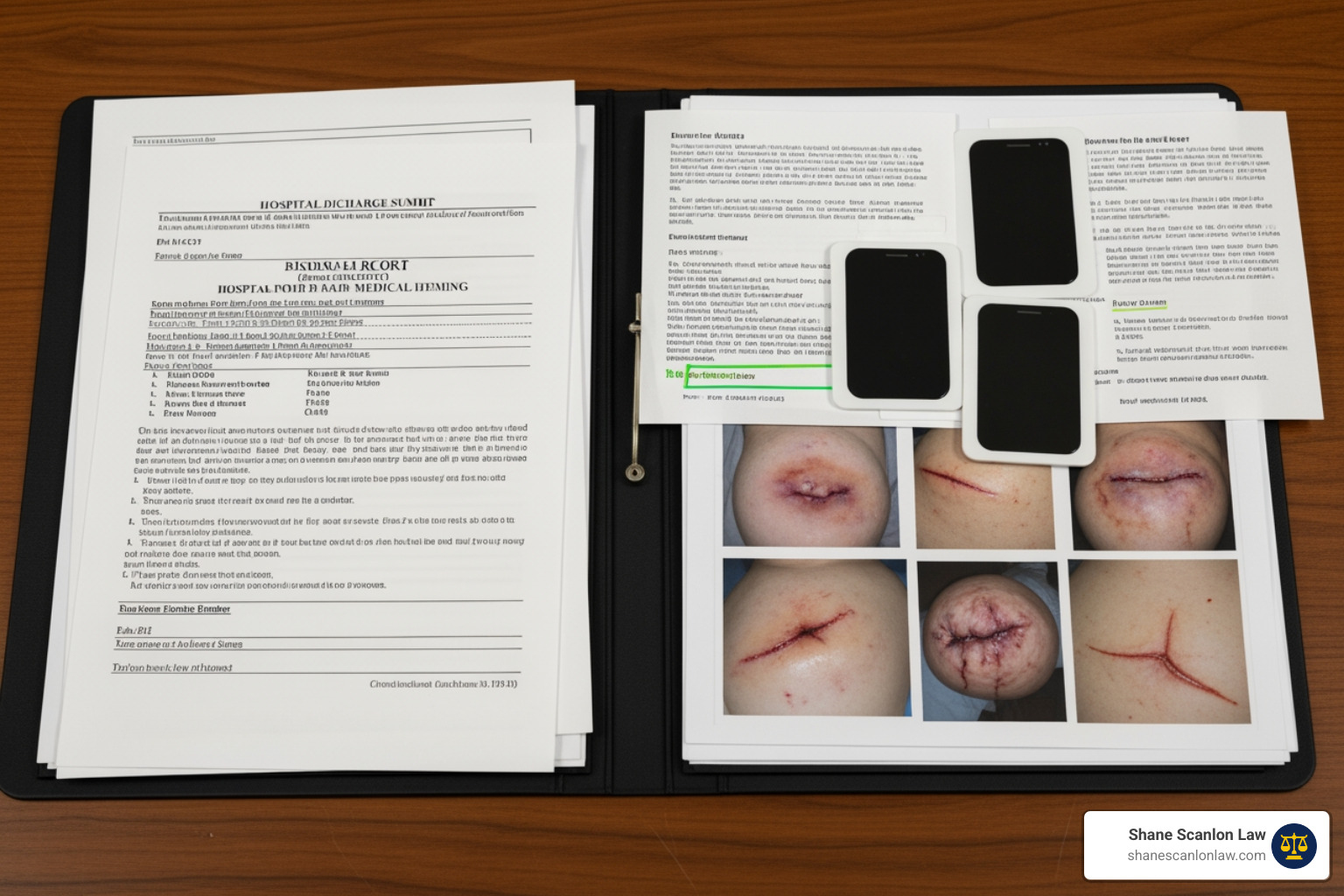
- Digital Evidence: Screenshots of threatening texts, emails, or social media messages.
- Physical Evidence: Photos of injuries (bruises, cuts) or property damage (broken doors, smashed phones).
- Official Records: Police reports, 911 call logs, and medical records from an ER visit.
- Witnesses: Friends, family, or neighbors who saw or heard the abuse.
How to File for a PFA in Pennsylvania Step by Step
Filing for a PFA can feel overwhelming, but the system is designed to be accessible even without a lawyer present for the initial paperwork.
Where to file, including county rules and out-of-state abusers
You typically file in the Court of Common Pleas in the county where you live, where the abuser lives, or where the abuse took place. For our local clients, this usually means the courthouse in Scranton (Lackawanna County) or Wilkes-Barre (Luzerne County).
If the abuser lives in another state, Pennsylvania courts can still issue an order as long as the abuse happened here or there is another legal connection to the state. You can learn more about the general court structure at the Protection Orders | Learn – Unified Judicial System of Pennsylvania website.
Step-by-step: how to get a temporary or emergency order
- The Petition: You fill out a “Petition for Protection From Abuse.” This is where you detail the recent incidents of abuse.
- The Interview: In many counties, you’ll speak with a PFA Coordinator or a domestic violence advocate who helps ensure your paperwork is complete.
- Ex Parte Hearing: You will see a judge (usually the same day). “Ex parte” means the abuser isn’t there. The judge will read your petition and ask you a few questions.
- The Temporary Order: If the judge believes there is an immediate danger, they will sign a Temporary PFA Order.
- Emergency PFAs: If the courthouse is closed (nights or weekends), you can go to a Magisterial District Judge to get an Emergency PFA that lasts until the next business day.
What happens after filing before the final hearing
Once a temporary order is signed, the police or sheriff must “serve” the defendant with the paperwork. The order is not in effect for the defendant until they are served. Once served, the defendant must follow all rules immediately. A final hearing is typically scheduled within 10 business days. During this time, it is vital to work on a safety plan, as the period between filing and the hearing can often be the most dangerous. You can find excellent resources for this through the PCADV.
Temporary, Emergency, and Final PFA Orders Explained
Understanding the timeline of these orders is essential for your long-term planning.
Emergency and temporary PFAs: how fast protection starts
The goal of an Emergency or Temporary PFA is immediate safety. They are short-term solutions. An Emergency PFA might only last 24–72 hours (until the court opens), while a Temporary PFA lasts until your final hearing date. These orders are issued based only on your testimony, which is why they are temporary—the law requires that the defendant eventually gets a chance to tell their side.
Final PFA orders: how long they last and what they can include
A Final PFA is issued after a full hearing where both sides can present evidence.
- Duration: Usually up to 3 years.
- Extensions: If the abuser continues to threaten you or violates the order, you can petition to have it extended.
- Finality: This is a formal court judgment.
What protections can a Pennsylvania PFA provide?
A Final PFA is much more than a “no-contact” order. It can include:
- Exclusive Possession: The abuser must move out, and you stay in the home.
- No Abuse: A general order to stop all forms of harassment and stalking.
- Custody/Support: Temporary orders for who the children live with and financial support payments.
- Firearm Surrender: The defendant must turn over all guns and ammunition to the sheriff or a licensed dealer.
- Counseling: The judge can order the abuser to attend batterers’ intervention programs.
Hearings, Defenses, Violations, and Consequences
The “Final Hearing” is the most critical day in the PFA process. This is where the “civil” nature of the case meets the “criminal” consequences.
What happens at the temporary and final PFA hearings?
At the final hearing, the plaintiff (the person asking for protection) goes first. You will testify under oath about what happened. The defendant’s lawyer will have the chance to cross-examine you. Then, the defendant can testify and present their own evidence. The judge then decides if the “preponderance of the evidence” shows that abuse occurred.
What defendants should do if served with a PFA
If you are served with a PFA, do not ignore it. Even if the allegations are false, the order is a legal command.
- Read the entire order: Know exactly where you can and cannot go.
- Zero Contact: Do not call, text, or even have a friend message the plaintiff. One “I’m sorry” text can land you in jail.
- Preserve Evidence: If you have texts or GPS data that proves the allegations are false, save them.
- Hire Counsel: Because a PFA can strip you of your home, your kids, and your gun rights, you need a defense strategy that protects your due process.
What happens if someone violates a PFA order?
Violating a PFA is known as Indirect Criminal Contempt (ICC). This is where things get very serious.
- Warrantless Arrest: Police can arrest a defendant on the spot if they have probable cause to believe a PFA was violated.
- Jail Time: A violation can lead to up to 6 months in jail and a $1,000 fine for each violation.
- Standard of Proof: To find someone in contempt, the violation must be proven “beyond a reasonable doubt”—the same high standard used in criminal trials.
For more on the specifics of enforcement, you can review the Pennsylvania Legal Services Authority guide.
How a PFA Affects Custody, Firearms, Records, and Your Future
The fallout of a PFA reaches far beyond the courtroom. It can change the trajectory of your personal and professional life.
Child custody, support, and property issues in a PFA case
A PFA judge has the power to upend your family dynamic. They can grant the plaintiff temporary sole custody if they believe the children are at risk. They can also order “indirect” support (paying the mortgage) or direct child support. These orders are temporary and usually stay in place until a separate custody or support case is handled in family court.
Firearms restrictions and surrender rules
This is one of the most significant consequences. Under both Pennsylvania law and federal law (the Lautenberg Amendment), someone subject to a Final PFA is generally prohibited from possessing firearms.
- Surrender: You must relinquish all firearms to the Sheriff’s office or a designated person within 24 hours of the order.
- License Impact: Your concealed carry permit (LTCF) will be revoked.
- Employment: If your job requires a gun (police, military, security), a PFA can effectively end your career.
Are PFA orders public record and do they show up on background checks?
PFAs are civil court records. While they are not “criminal convictions,” they are part of the public court docket.
- Employer Screening: Many modern background checks will flag a PFA filing.
- Criminal Records: If you are found in “contempt” for a violation, that is a criminal matter and will appear on your criminal record.
Can a PFA be modified, extended, dismissed, or appealed?
Yes. The law allows for changes if circumstances change.
- Modification: Either party can petition the court to change terms (e.g., changing a “no contact” to “no abusive contact” to allow for co-parenting).
- Dismissal: A plaintiff can ask to withdraw the PFA, but the judge must approve it to ensure the victim isn’t being coerced.
- Appeal: If a judge makes a legal error, the decision can be appealed to the Pennsylvania Superior Court.
Frequently Asked Questions About What Is a PFA Order in Pennsylvania
What is a PFA order in Pennsylvania if there are no criminal charges?
A PFA is independent of criminal charges. You can get a PFA even if the police were never called and the abuser was never arrested. The burden of proof in a PFA (preponderance) is much lower than in a criminal case (beyond a reasonable doubt).
Can you get a PFA against someone who lives in another state?
Yes. If the abuse occurred in Pennsylvania, or if you moved here to escape the abuse, our local courts in Lackawanna or Luzerne County can often assert jurisdiction to protect you.
How long does it take to get protection after filing?
Usually, you get protection the same day. If you file during business hours, you’ll likely have a temporary order in hand before you leave the courthouse. If it’s 2:00 AM, an Emergency PFA can be issued by a night judge almost immediately.
Conclusion
Navigating what is a pfa order in pennsylvania is never easy. Whether you are seeking safety or defending your reputation, the process is emotionally charged and legally complex. The decisions made in a PFA hearing can affect where you live, when you see your children, and your basic constitutional rights for years to come.
At Shane Scanlon Law, we bring the perspective of a former prosecutor to every case. We understand how the police and the courts view these petitions, and we know how to ensure that the “quasi-criminal” nature of a PFA doesn’t result in an unfair outcome.
If you need help filing for protection or if you’ve been served with an order and need to protect your future, don’t wait. Reach out to us today for trusted, local representation in Scranton, Wilkes-Barre, and throughout NEPA.