
 Call Anytime
833.722.6566
Call Anytime
833.722.6566
Beat the Breathalyzer: Smart Ways to Challenge DUI Charges

Facing a DUI? Why a Charge is Not a Conviction
How to fight DUI charges starts with understanding a critical fact: an arrest is not a conviction. While being charged with driving under the influence is serious and carries significant consequences, including jail time, steep fines, license suspension, and a permanent criminal record, you have the right to challenge the evidence against you. The prosecution must prove your guilt beyond a reasonable doubt, and there are numerous legal strategies to create doubt or expose flaws in their case.
Key Ways to Fight a DUI Charge:
- Challenge the Traffic Stop – Police must have reasonable suspicion or probable cause to pull you over
- Question the Arrest – Lack of probable cause for arrest can lead to evidence suppression
- Scrutinize Chemical Tests – Breathalyzer and blood tests can be inaccurate due to improper calibration, administration, or handling
- Contest Field Sobriety Tests – FSTs are subjective and can be challenged based on improper administration or innocent explanations
- Raise the Rising BAC Defense – Your BAC may have been below the legal limit while driving but rose by the time of testing
- Identify Medical Conditions – Conditions like GERD, diabetes, or allergies can mimic intoxication or cause false positives
- Challenge Officer Observations – Contradictions or innocent explanations for “signs of impairment” can create reasonable doubt
- Expose Procedural Violations – Violations of your constitutional rights, such as failure to give Miranda warnings, can result in evidence being thrown out
As Shane Scanlon, a former Lackawanna County District Attorney with over 20 years of trial experience prosecuting and defending DUI cases, we know exactly how to fight DUI charges from both sides of the courtroom. That unique perspective allows us to identify weaknesses in the prosecution’s case that other attorneys might miss, giving our clients the strongest possible defense.
Understanding What the Prosecution Must Prove
To secure a DUI conviction in Pennsylvania, the prosecution must prove two key elements beyond a reasonable doubt. Our defense strategy will focus on creating doubt in one or both of these areas, aiming to either reduce the charges or secure a full acquittal.
The two main ways the prosecution attempts to prove a DUI in Pennsylvania are:
- General Impairment: Proving that you were driving under the influence of alcohol or drugs to a degree that rendered you incapable of safe driving. This often relies on officer observations and Field Sobriety Tests.
- Per Se DUI: Proving that your Blood Alcohol Content (BAC) was at or above the legal limit of 0.08% within two hours of driving. This relies on chemical tests like breathalyzers or blood tests. For commercial drivers in Pennsylvania, the limit is 0.04%, and for those under 21, it’s 0.02%.
Here’s a quick comparison:
| Requirement | General Impairment DUI | Per Se DUI (BAC .08% or higher) |
|---|---|---|
| Proof of Impairment | Officer observations, FSTs, driving patterns | Chemical test results (breath or blood) |
| BAC Level | Any detectable amount (can be below 0.08%) | 0.08% or higher (or 0.04% for CDL, 0.02% for under 21) |
| Focus | Your ability to drive safely | Your blood alcohol level |
| Evidence Type | Subjective (officer testimony) and objective (FST results) | Objective (scientific test results) |
The “Driving” or “Actual Physical Control” Element
First, the prosecution must prove that you were operating the vehicle. In Pennsylvania, this isn’t always as straightforward as it sounds. You don’t necessarily have to be caught actively driving down the road. Instead, the law often uses the concept of “Actual Physical Control.” This means you were in a position to operate the vehicle, even if it was parked. For instance, if you’re found asleep in your car with the keys in the ignition, you could be charged.
However, even in “Actual Physical Control” cases, we can often challenge whether there was a “realistic risk” that the vehicle could have been put in motion. For example, if the keys weren’t in the ignition, or if the car was inoperable, it becomes much harder for the prosecution to prove that you posed a realistic danger. The law regarding “care and control” can be quite nuanced, as clarified by various court decisions, and we will scrutinize every detail to determine if the prosecution has truly met their burden. You can find more information about these types of charges and their interpretation here.
The “Under the Influence” Element
Second, the prosecution must prove that you were “under the influence.” This typically means they must show one of two things:
- You were impaired by alcohol or drugs to a degree that rendered you incapable of safe driving. This is the “general impairment” charge and relies heavily on an officer’s observations of your demeanor, driving, and performance on Field Sobriety Tests (FSTs).
- Your Blood Alcohol Content (BAC) was at or above the legal limit of 0.08% (or 0.04% for commercial drivers, 0.02% for underage drivers) within two hours of driving. This is the “per se” charge and relies on the results of chemical tests like breathalyzers or blood tests.
This element is where many of our most effective defenses come into play, as we can challenge the reliability of tests, the accuracy of observations, and the procedures followed by law enforcement.
Challenging the Evidence: How to Fight a DUI Charge
A strong DUI defense involves a meticulous review of the prosecution’s evidence. Every single step, from the initial traffic stop to the administration of chemical tests, can be scrutinized for errors, inaccuracies, and constitutional violations. This is often where we find the leverage needed to turn a seemingly open-and-shut case on its head.
Procedural Errors: A Key Strategy for How to Fight a DUI
Police officers are bound by strict legal protocols and constitutional safeguards. If they violate these procedures at any point, it can lead to crucial evidence being suppressed, which often results in charges being reduced or even dismissed. This is a powerful way how to fight DUI charges.
Common procedural errors we look for include:
- Unlawful Traffic Stop: An officer must have “reasonable suspicion” or “probable cause” to pull you over. They can’t just stop you because they have a hunch. If the initial stop was illegal, any evidence gathered afterward—including FSTs and chemical test results—could be thrown out. This means the entire case against you could collapse.
- Lack of Probable Cause for Arrest: Even if the stop was legal, the officer must have “probable cause” to believe you were driving under the influence before they can arrest you. This usually comes from observations of your driving, your demeanor, and your performance on FSTs. If they didn’t have enough evidence to justify the arrest, we can argue for the suppression of any evidence obtained after that point.
- Miranda Rights Violations: After an arrest, if the police question you while you are in custody, they must first read you your Miranda rights (the right to remain silent, the right to an attorney). If they fail to do this and you make incriminating statements, those statements generally cannot be used against you in court.
In Lackawanna County, Pennsylvania, and across the state, we carefully review every police report, dashcam footage, and bodycam footage to identify these critical procedural missteps. Our deep understanding of local law enforcement practices allows us to pinpoint violations that can be the key to your defense. For more specific information about challenging DUI charges in our area, you can learn more about DUI Charges in Lackawanna County, PA.
How to Fight a DUI by Scrutinizing Test Results
Chemical tests and physical tests are designed to measure impairment, but they are far from infallible. Their accuracy depends heavily on proper administration, calibration, and interpretation. We dig into the science and the procedures to expose potential flaws.
- Challenging Breathalyzer Results: Breathalyzers are mechanical devices, and like all machines, they can malfunction or be improperly used. We investigate:
- Calibration and Maintenance: Was the machine properly calibrated and regularly maintained according to state regulations? Faulty calibration can lead to inaccurate readings.
- Officer Training: Was the officer who administered the test properly trained and certified to operate the specific device?
- 15-Minute Observation Period: Before a breath test, the officer is generally required to observe you continuously for at least 15 minutes to ensure you don’t ingest anything, burp, or regurgitate, as “mouth alcohol” can artificially inflate BAC readings. If this wasn’t done, the results can be challenged.
- Interfering Substances: Certain medical conditions or even common items like mouthwash can contain alcohol and interfere with breathalyzer accuracy.
- Disputing Blood Test Accuracy: While often considered more reliable, blood tests can also be challenged:
- Chain of Custody: Was the blood sample properly collected, stored, and transported to prevent contamination or tampering? Any break in the “chain of custody” can render the results inadmissible.
- Laboratory Errors: Were the laboratory procedures followed correctly? Were there any errors in analysis?
- Preservatives and Anticoagulants: Were the correct preservatives and anticoagulants used in the collection vial, and were they within their expiration date?
- Warrant Requirements: In some cases, blood draws may require a warrant. If one wasn’t obtained when necessary, the evidence could be suppressed.
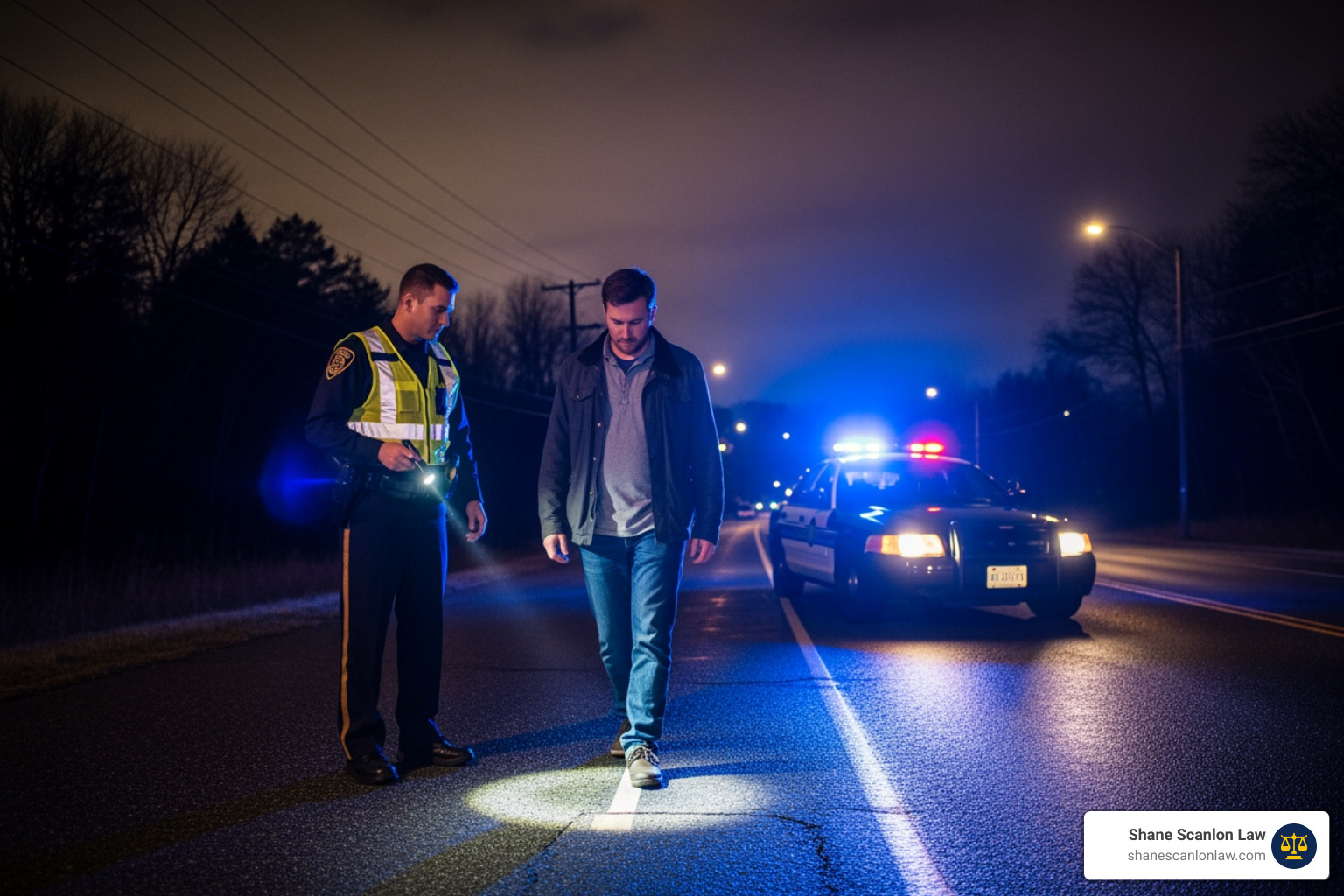
- Questioning Field Sobriety Test (FST) Administration: FSTs are highly subjective and often performed under less-than-ideal conditions. While the National Highway Traffic Safety Administration (NHTSA) claims FSTs accurately predict alcohol impairment 91% of the time under perfect conditions, these “perfect conditions” rarely exist in the real world. We challenge FSTs by:
- Improper Administration: Officers must administer FSTs according to standardized procedures. Any deviation can compromise their validity.
- Environmental Factors: Was it dark? Was the ground uneven? Were there bright lights or distractions? These factors can affect performance regardless of sobriety.
- Physical Limitations: Did you have any medical conditions, injuries, or even just uncomfortable shoes that might have impacted your balance or coordination? We’ve seen cases where flat feet or inner ear issues were mistakenly interpreted as signs of intoxication.
Our firm is adept at scrutinizing every aspect of these tests. For more information on the limitations of these tests, you can refer to the NHTSA’s guidelines.
Common DUI Defense Strategies Explained
Beyond procedural errors, several specific defenses can be used to create reasonable doubt about your guilt. An experienced lawyer will know which strategy best fits the facts of your case, considering Pennsylvania’s specific DUI laws and our local court procedures.
The ‘Rising Blood Alcohol’ Defense
This is a clever defense that can be particularly effective when there’s a significant delay between when you were last driving and when your BAC was actually tested. The argument is that your BAC was below the legal limit of 0.08% at the time you were driving, but it continued to rise while you were being investigated, transported, and finally tested at the police station. By the time the test was administered, your BAC had indeed surpassed the legal limit.
Alcohol isn’t absorbed instantly into your bloodstream. It takes time, often 30 to 90 minutes or even longer, for alcohol to fully enter your system and for your BAC to reach its peak. For instance, in California, it takes, on average, about 50 minutes for BAC to reach peak levels, but it can take as much as two or three hours. If your last drink was consumed shortly before you were pulled over, your BAC could have been rising during the stop and subsequent testing.
To use this defense, we often work with expert toxicologists who can analyze the timeline of events, your drinking patterns, and the test results to estimate your BAC at the actual time of driving. This can introduce “reasonable doubt” about whether you were legally impaired when you were behind the wheel.
Medical Conditions and Other Innocent Explanations
Sometimes, what looks like intoxication to an officer can actually be attributed to perfectly innocent medical conditions, medications, or even environmental factors. We explore these possibilities thoroughly.
- Gastroesophageal Reflux Disease (GERD): Conditions like GERD can cause residual alcohol from the stomach to remain in the mouth or regurgitated, leading to “mouth alcohol” that can falsely inflate a breathalyzer reading.
- Diabetes (Ketosis): Individuals with diabetes, especially if their blood sugar is poorly controlled, can produce ketones. Some breathalyzer devices may mistake these ketones for alcohol, resulting in a false positive or an inaccurately high BAC reading. Certain low-carbohydrate or fasting diets can also induce ketosis.
- Medication Effects: Both prescription and over-the-counter medications can cause drowsiness, dizziness, impaired coordination, or slurred speech—symptoms that can easily be mistaken for alcohol intoxication. If you were taking prescribed medication as directed, this can be a strong defense.
- Common Conditions: We’ve all had those days! Allergies can cause red, watery eyes. Fatigue can lead to slow reactions or slurred speech. Even a common cold can mimic some signs of impairment.
- Physical Injuries or Conditions: A pre-existing injury, a neurological condition, or even just nerves can cause poor performance on Field Sobriety Tests. For example, if you have flat feet, you might struggle with balance tests. The officer might assume intoxication, but we can provide an alternative, innocent explanation.
We will gather your medical records and consult with medical experts if necessary to present a compelling argument that your observed symptoms were not due to alcohol or drug impairment. Even common conditions like red eyes have many causes unrelated to alcohol.
Challenging the Officer’s Observations
An officer’s subjective observations are a cornerstone of the prosecution’s case, particularly in general impairment DUI charges. However, these observations are prone to human error and bias, and we are skilled at challenging them.
- Contradictory Officer Testimony: We carefully review all reports and testimony from every officer involved. If there are inconsistencies or contradictions between their accounts of your driving, behavior, or physical appearance, it can create significant doubt in the judge’s or jury’s mind. For example, if one officer says you were swaying but another says you were steady, who are we to believe?
- Innocent Explanations for “Impaired” Appearance: Many “signs of intoxication” have perfectly innocent explanations.
- Slurred Speech: Could be due to fatigue, nervousness, a dental issue, or a medical condition, not alcohol.
- Odor of Alcohol vs. Odor of Alcoholic Beverage: There’s a difference! The smell on your breath might be from something else, or alcohol has no smell itself, it’s the other things in the drink.
- Bloodshot Eyes: As mentioned, allergies, lack of sleep, or irritation can cause this.
- Poor FST Performance: Nerves, environmental conditions (like uneven ground or bad weather), age, or physical conditions can all lead to poor performance on FSTs, entirely unrelated to impairment.
- Driving Patterns: Even erratic driving doesn’t automatically equal DUI. As the National Highway Traffic Safety Administration (NHTSA) states, cues based on driving patterns are predictive of drunk/drugged driving only 35% of the time. Sober people can weave, drift, or make wide turns for many reasons.
We will cross-examine the officers rigorously, highlighting these innocent explanations and inconsistencies to cast doubt on their conclusions. Our goal is to show that their observations, while perhaps sincere, do not definitively prove impairment. Understanding your rights and the nuances of these challenges is crucial, especially for a first-time DUI charge in Pennsylvania.
How a DUI Lawyer Builds Your Defense
Navigating the complexities of a DUI case alone is a significant risk. Pennsylvania’s DUI laws are among the harshest in the country, and the consequences of a conviction can be life-altering. This is precisely why a skilled DUI lawyer, especially one with experience as a former prosecutor, can be your most powerful asset.
We approach every case with a comprehensive strategy, leveraging our unique background to anticipate the prosecution’s moves and build a robust defense:
- Evidence Analysis: We carefully review every piece of evidence, from police reports and witness statements to dashcam and bodycam footage, chemical test results, and maintenance logs for testing equipment. Our experience as former prosecutors means we know exactly what to look for—the inconsistencies, the procedural errors, and the weaknesses that can undermine the prosecution’s case.
- Legal Research and Strategy: We apply the most up-to-date legal precedents and defense strategies specific to Pennsylvania DUI law. This includes filing motions to suppress illegally obtained evidence, challenging the admissibility of test results, and preparing arguments based on rising BAC, medical conditions, or other relevant defenses.
- Negotiation with Prosecutors: Many DUI cases are resolved through plea bargaining. Our firm’s reputation and our deep understanding of the prosecution’s perspective allow us to negotiate from a position of strength. We often secure reduced charges (like “wet reckless” or “dry reckless,” if applicable in PA), alternative sentencing, or entry into diversionary programs like Accelerated Rehabilitative Disposition (ARD) for eligible first-time offenders in Lackawanna County, Luzerne County, and other NEPA jurisdictions.
- Courtroom Representation: If your case goes to trial, you need an attorney who is not afraid to litigate fiercely. Our extensive trial experience, both as prosecutors and defense attorneys, means we are comfortable and effective in the courtroom. We will present your defense compellingly, cross-examine witnesses effectively, and argue passionately for your acquittal.
- Protecting Your Rights: From the moment you hire us, our priority is to protect your constitutional rights. This includes ensuring proper police procedure, safeguarding your right to counsel, and challenging any violations that occurred during your stop or arrest.
Having a dedicated and experienced DUI lawyer can significantly impact the outcome of your case. We can help reduce or even dismiss your DUI charge, protecting your license, your freedom, and your future. For more on how we can assist, please visit How a DUI Lawyer Can Help Reduce or Dismiss Your DUI Charge.
Frequently Asked Questions about Fighting a DUI
What is the first thing I should do if I’m charged with a DUI?
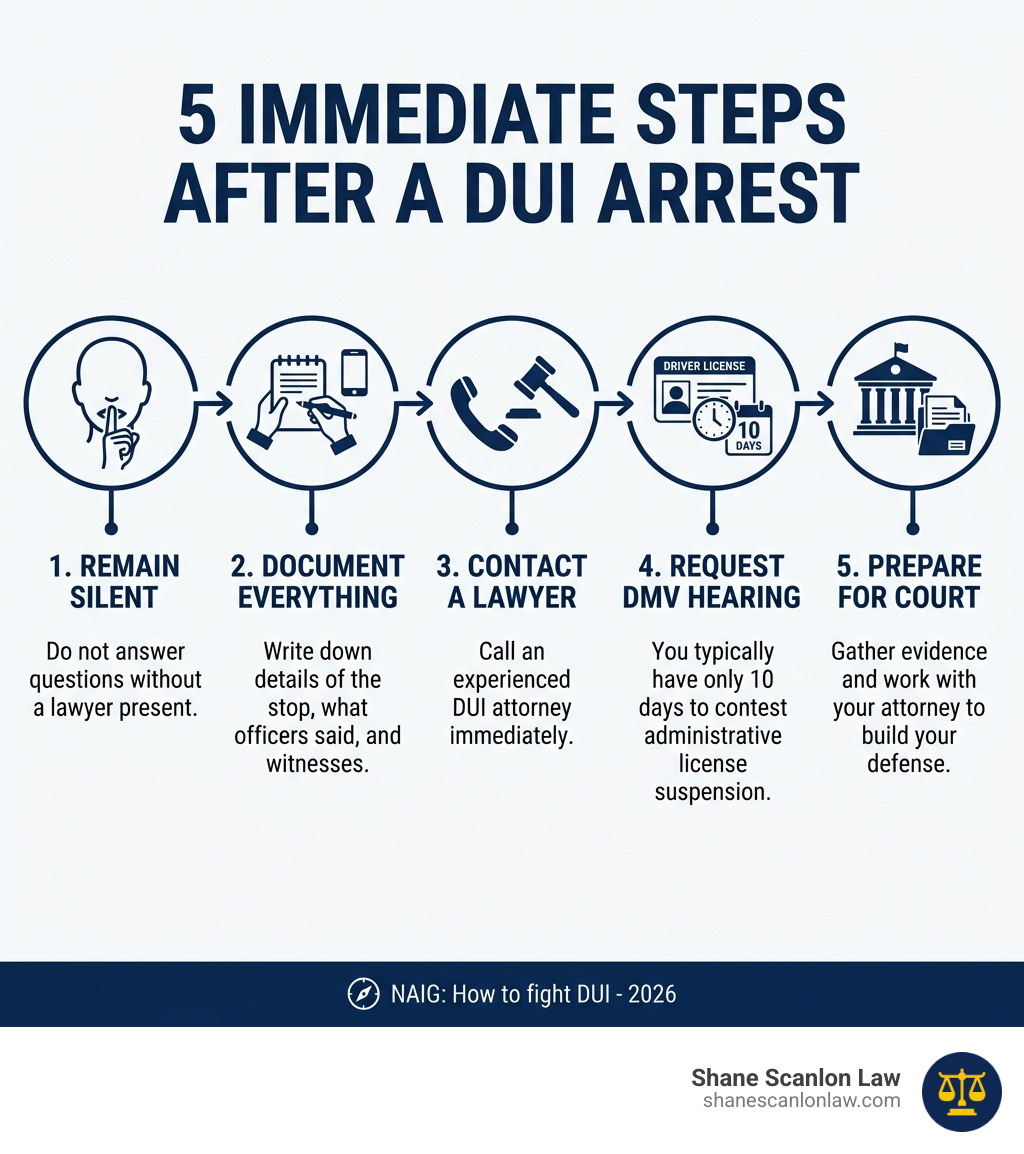
The absolute first thing you should do is immediately contact an experienced DUI defense attorney. Do not speak to law enforcement or prosecutors without legal counsel. Remember your right to remain silent. Beyond that, try to document every detail you can remember about the traffic stop, the arrest, the officers’ questions, and any tests administered. This information can be invaluable for building your defense.
Can a DUI charge be beaten in Pennsylvania?
Yes, absolutely. A DUI charge does not automatically lead to a conviction. While the penalties in Pennsylvania are severe, there are numerous ways to successfully fight a DUI charge. Defenses based on improper police procedure, inaccurate chemical tests, a lack of evidence to prove impairment or operation, or the presence of innocent explanations for observed symptoms can all lead to a reduction of charges, entry into diversionary programs like ARD, or a full acquittal at trial. We have built our reputation on doing just that for our clients in Scranton, Wilkes-Barre, and throughout Northeastern Pennsylvania.
What are the consequences of a second or third DUI in PA?
The penalties for DUI in Pennsylvania increase significantly with each subsequent offense within a 10-year lookback period.
For a second DUI offense, you face:
- Longer mandatory jail sentences (often starting at 90 days).
- Higher fines.
- Extended license suspensions (typically 12 or 18 months).
- Mandatory ignition interlock device installation for at least one year.
- More extensive alcohol highway safety school and treatment requirements.
For a third or subsequent DUI offense, the consequences become even more severe:
- Mandatory jail sentences can be much longer (starting at one year or more).
- Fines increase substantially.
- License suspensions are even longer.
- There’s a significant risk of a felony conviction, which carries a host of additional, lifelong repercussions beyond the immediate penalties.
Understanding these escalating penalties underscores the critical importance of fighting every DUI charge. You can find more detailed information about the penalties for second DUI in Pennsylvania and the severe consequences of a third DUI in Pennsylvania.
Take the First Step to Protect Your Future
Facing a DUI charge in Pennsylvania can feel overwhelming, but remember, an arrest is not the end of your story. Fighting a DUI charge requires a proactive and strategic approach. Understanding your rights and the potential defenses is the first step, but executing that defense successfully requires professional skill, deep legal knowledge, and aggressive representation.
At Shane Scanlon Law, we bring over 20 years of experience to the table, including significant time as a District Attorney. This unique background provides us with unparalleled insight into how the prosecution builds its cases, allowing us to identify weaknesses and craft powerful defenses that others might miss. We are dedicated to providing trusted local representation across Northeastern Pennsylvania, including Scranton, Wilkes-Barre, Lackawanna County, Luzerne County, Susquehanna County, and Wyoming County.
Don’t steer this complex legal landscape alone. Protect your freedom, your finances, and your future. Contact us today for a free consultation to discuss your case and explore how we can fight for you. Your future is too important to leave to chance. Contact a Scranton DUI Attorney now.